Joseph Needham Quotes
Although there is a very large literature, still growing almost daily, on the Chinese calendar, its interest is, we suggest, much more archaeological and historical than scientific.
Needham, Joseph. Science and Civilisation in China, Volume 3: Mathematics and the Sciences of the Heavens and the Earth. Cambridge University Press, 1959, p. 390.


Crocker’s railroad was way behind schedule for laying of track. The problem was an acute shortage of manpower. Someone suggested that they try Chinese labor. However Crocker’s superintendent of construction, James Strobridge, felt that they were too small, not strong enough, and inexperienced at construction. Soon Crocker had 11,000 Chinese workers. The Chinese were wonderful construction workers and the Southern Pacific Railroad thrived as other employers also began using Chinese workers.

The great wall of China was built just as much to keep the Chinese in as to keep the barbarians out.
The Chinese 1st Emperor had unified China by brutal war. His troops and government were more sophisticated than the others and they were particularly sophisticated about drafting soldiers, forcing the civilian population to manufacture weapons for the huge military and to levy and collect taxes. Many people in the conquered provinces fled from China. The Emperor responded to the outside ‘barbarians’ and the fleeing Chinese by connecting the many walls that existed on the Chinese border into one unified wall as much to keep his labor force in China as to keep others out.


He was discussing his unprecedented steps that as Federal Reserve Chairman he took to cope with the Great Recession after the Meltdown of 2008. He had, as a graduate doctoral student, studied the economic history of the Great Depression of 1929 and the government attempts to ameliorate some of the effects. He was one of the few people in government who had this historical perspective.


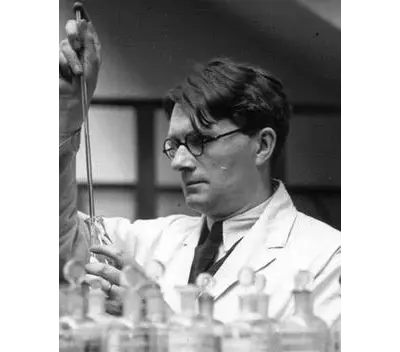
Noel Joseph Terence Montgomery Needham CH FRS FBA was a British biochemist, historian and sinologist known for his scientific research and writing on the history of Chinese science and technology. He was elected a fellow of the Royal Society in 1941, and a fellow of the British Academy in 1971. In 1992, Queen Elizabeth II conferred on him the Companionship of Honour, and the Royal Society noted he was the only living person to hold these three titles.
