John Grisham Quotes
Mr. Buckley, let me explain it this way. And I'll do so very carefully & slowly so that even you will understand it. If I was the sheriff, I would not have arrested him. If I was on the grand jury, I would not have indicted him. If I was the judge, I would not try him. If I was the D.A., I would not prosecute him. If I was on the trial jury, I would vote to give him a key to the city, a plaque to hang on his wall, & I would send him home to his family. And, Mr. Buckley, if my daughter is ever raped, I hope I have the guts to do what he did.
Grisham, John. A Time to Kill. Wynwood Press, 1989.


Pakistan follows a version of Islamic Law—Sharia—which provides that a man can be convicted of rape only if there are at least 4 male witnesses. Since it is virtually impossible to ever get 4 witnesses to a crime like that, there will never be a conviction. However, the complaining victim runs two additional dangers. First she is admitting to fornication and or adultery and can be jailed or even killed for that. Further, Pakistan males regard her as a prostitute and the police will also rape her very often.


This is one of the many statements of President Bush that contributed to his reputation as a polarizing politician. His supporters turned to this statement to illustrate that Bush was a supporter of the Constitution and civil liberties by urging the nation not to engage in vigilantism or give vent to their stereotypic views of minorities. Detractors took the same statement as a perfect example of Bush’s assault on Constitutional freedoms. Law enforcement does not determine guilt or innocence in our system. Police and prosecutors in America do not determine guilt or innocence; juries do. They argue that the Bush administration law enforcement policies are designed to have law enforcement usurp more and more of this facet of criminal justice.


Another danger for a woman reporting rape, is that her male relatives might murder her for bringing shame and dishonor upon the family. This is not uncommon in some Islamic nations.

This quotation is a great example of the difficulty of deciding some of the major Constitutional issues. Most reasonable people believe that Rehnquist certainly has a point. On the other hand, critics observe that this quotation essentially says that it is OK to convict an innocent person if it cost too much or be too much trouble to do so. Reasonable people would also agree that this objection has much merit also. So the judicial system is stuck with deciding when the cost or trouble is too much. There will never, can never, be a clear cut answer.

He was one of the few “national security hawks” who was willing to place this issue in the public table. In the 21st Century, there were some Muslims living in Democratic countries who were or had just become radical Islamic extremist jihadist by religious belief and philosophy. Some would preach or advocate violence in terrorism against Democracy and the west. Many of these people with radical Islamic beliefs would give material aid and comfort to terrorists and some would themselves engage in terrorist activities themselves. When they did, it was too late to prevent tragedies. So there was this population of emotional and intellectual terrorists who could act on their beliefs at any moment. These are what Hayden referred to as the “not yet guilty”. Preventive detention could protect against serious terrorist attacks. But the legal system of virtually every democracy had no legal bases to incarcerate or move against anyone for his/her beliefs or speech. Criminal charges required action other than thoughts, beliefs or speech. But by waiting until there is terrorist action, the law enforcement authorities give up the ability to prevent the terrorist action. Some were advocating changes in this fundamental and traditional distinction of law enforcement.


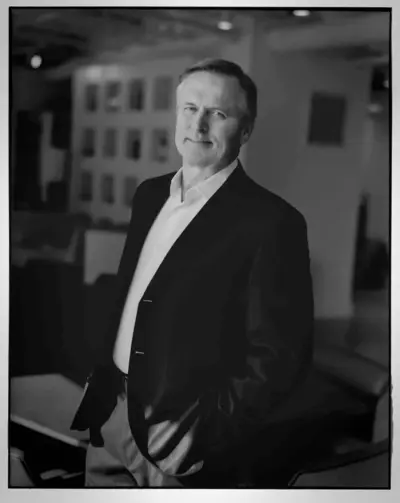
John Ray Grisham Jr. is an American novelist, attorney, politician, and activist, best known for his popular legal thrillers. His books have been translated into 42 languages and published worldwide.
