George Herbert Quotes
Mony refused looseth its brightnesse.
Herbert, George. Jacula Prudentum, or Outlandish Proverbs, Sentences, etc. T. Maxey for T. Garthwait, 1651.


Conservatives are surprised to learn that their great economic nemesis was one of the early economists who saw the danger of paper money and government control over the minting of money which is one of their core concerns.


This quotation is fascinating because it illustrates the degree to which the Southern people censored themselves on what in most cultures would be morale issues. In many ways the ability to ignore reality made it easier for the Confederate government to operate, but distorted the decisions that were made. Arguably, in most other cultures, public opinion on the reality of the situation would have brought the war to an end sooner and ironically on far better terms than they ended up with. Eggleston was an accomplished writer who had served in the Confederate army of the Civil War. 20 year after the war he wrote a series of articles for the prestigious Northern Atlantic Monthly trying to convey the war from the Southerner’s point of view.

Most people owned a little land as most of America were still farmers. They had small amounts of money at different times but spent it for necessities. A relatively few people (mostly in the East) had money—gold and paper currency backed by gold. If the price of property was high, only rich could afford to buy it. The home mortgage system did not then exist, so there was no way that the average land owner could get enough money to buy land to expand farms or buy for children unless the price was low. Today, most land owners want the price of land to be high. The financial system in use at the time makes the difference.

What the Prime Minister was trying to say is that the buying power had not been diminished suddenly for local and non-imported items.


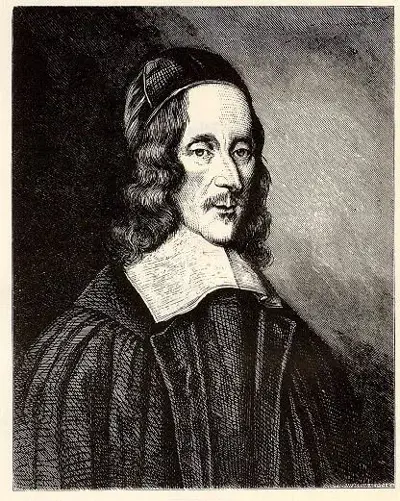
George Herbert was a Welsh-born poet, orator, and priest of the Church of England. His poetry is associated with the writings of the metaphysical poets, and he is recognised as "one of the foremost British devotional lyricists." He was born into an artistic and wealthy family and largely raised in England. He received a good education that led to his admission to Trinity College, Cambridge, in 1609. He went there with the intention of becoming a priest, but he became the University's Public Orator and attracted the attention of King James I. He served in the Parliament of England in 1624 and briefly in 1625.
