Annie Besant Quotes
Men, women, and children, who would be doomed to death in the savage state, have their lives prolonged by civilization; the sickly, whom the hardships of the savage struggle for existence would kill off, are carefully tended in hospitals, and saved by medical skill; the parents, whose thread of life would be cut short, are cherished on into prolonged old age; the feeble, who would be left to starve, are tenderly shielded from hardship, and life’s road is made the smoother for the lame; the average life is lengthened, and more and more thought is brought to bear on the causes of preventable disease; better drainage, better homes, better food, better clothing, all these, among the more comfortable classes, remove many of the natural checks to population.
There were few reformers who had such a long, extensive, and activist career in both England and India. She began her career as a minister’s wife but was literally turned out of her house by her husband for whom she was not religiously orthodox enough. This started her religious activism which ended with her as an atheist. She led a match-girl’s strike, founded a Hindu college in India, and was even arrested for pornography in England when she wrote a book advocating birth control. She is on many lists of “Great Indians” along with Gandhi and Nehru. She was Jiddu Krishnamurti’s teacher.
Annie Besant, 1847-1933, English Philosopher, Feminist, Anti-Colonialist, Journalist, Secular Humanist, Labor Organizer, & Reformer, President of The English Theosophical Society, Founder, Central Hindu College at Benaras, India, President, Indian Home Rule League & The Indian National Congress, The Law of Population
Sourced by: Eigen's Political and Historical Quotations


This is a remarkably accurate prediction of a process that has rapidly accelerated to a point that would surprise most people of the 18th century except de Condorcet.


26 years after the Castro led Cuban Revolution Although the Cuban economy tanked under Castro’s communism, the progress in health, nutrition and education were amazing—the greatest progress in the least time that occurred in history except for the possible exception of Israel. Castro, however, accomplished these achievements trampling over people’s individual rights. If a Cuban was literate, it mattered not whether he/she wanted to teach others. This was a requirement with no pay provided.

He did adopt a program of extensive building of apartments, schools, hospitals and other infrastructure. But the nation was in a virtual dictatorship of him and his wife with little regard for human rights. The rapid steding on construction was then followed by his program of austerity in which food became so scarce that malnutrition was common and many were at the verge of starvation to pay his programs. He and his wife were convicted at a show trial and executed immediately afterward.

Bush had advised FDR to go ahead with the research and development program to try and develop an atomic bomb. He was the only Government Official who Roosevelt discussed the idea with. At the time, Bush as a government official supervised and directed many thousands of scientists, and was one of just a few scientists who monitored and advised on the Manhattan Project to develop the Bomb.

This true statement hurt Reagan somewhat but not enough to defeat him. At the time, only a small percentage of Americans had any experiences yet with what became one of the most popular programs in American history. Reagan, once in office never repeated any of his early anti-Medicare statements and ironically, in the 8 years of the Reagan Presidency, Medicare became extremely popular.
In the next century, the American lifespan increased over a decade—true social progress.
A century later, we had in the United States exactly what Biggs told everyone was possible with a Public Health investment. Average lifespan had increased by over a decade. Many Americans work into their 70s and 80s. And with modern drugs pain and suffering has been vastly reduced. In retrospect, .
This was a new idea for most Americans at the time. A century later, there were still a few politicians who did not accept this idea.

The principle espoused in this quotation is the major reason that Health Care costs are so difficult to control. The individual patient and consumer is not driven by market conditions when his/her life is at stake.

He and the Fascist Italian government were very proud of this accomplishment which to them justified all the abuse, exploitation and denial of human rights that was inherent in Italian Colonialism then. The Fascists accomplished some worthy goals of governing like this one. American fascist admirers, of which there were many, pointed to these accomplishments in trying to persuade public opinion to adopt more right wing programs and measures.

His and his wife's foundation - the Gates Foundation -- provides more money to address this problem than any nation does.


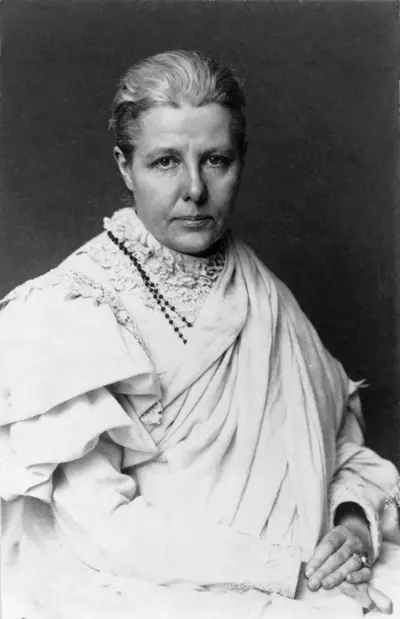
Annie Besant (née Wood; 1 October 1847 – 20 September 1933) was a British socialist, theosophist, freemason, women's rights and Home Rule activist, educationist, and campaigner for Indian nationalism. Regarded as a champion of human freedom, she was an ardent supporter of both Irish and Indian self-rule. She was also a prolific author with over three hundred books and pamphlets to her credit. As an educationist, her contributions included being one of the founders of the Banaras Hindu University. For fifteen years, Besant was a public proponent in England of atheism and scientific materialism. Besant's goal was to provide employment, better living conditions, and proper education for the poor.
