Francois Rabelais Quotes
Men that are free, well-born, well-bred, and conversant in honest companies, have naturally an instinct and spur that prompteth them unto virtuous actions, and withdraws them from vice, which is called honour. Those same men, when by base subjection and constraint they are brought under and kept down, turn aside from that noble disposition, by which they formerly were inclined to virtue, to shake off and break that bond of servitude, wherein they are so tyrannously enslaved; for it is agreeable with the nature of man to long after things forbidden, and to desire what is denied us.
Rabelais, François. Gargantua and Pantagruel. Translated by Sir Thomas Urquhart and Peter Antony Motteux, vol. 1, D. Nutt, 1900, p. 170.


To many of us the notion of liberty and aristocracy and nobility are contradictory. However, at the time, the nobility, unlike most Poles, were literate and educated and had followed the U. S. Constitution adoption. And this Constitution was created with the Nobility being one of the driving forces. See {585394}.


_0_thumbnail_47x47.jpg "Statue of Robert Hall in Leicester.")


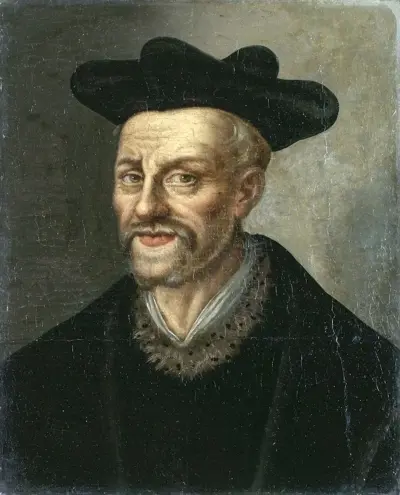
François Rabelais (UK: /ˈræbəleɪ/ RAB-ə-lay, US: /ˌræbəˈleɪ/ -LAY, French: [fʁɑ̃swa ʁablɛ]; born between 1483 and 1494; died 1553) was a French Renaissance writer, physician, Renaissance humanist, monk and Greek scholar. He has historically been regarded as a writer of satire, the grotesque, bawdy jokes, and songs.
