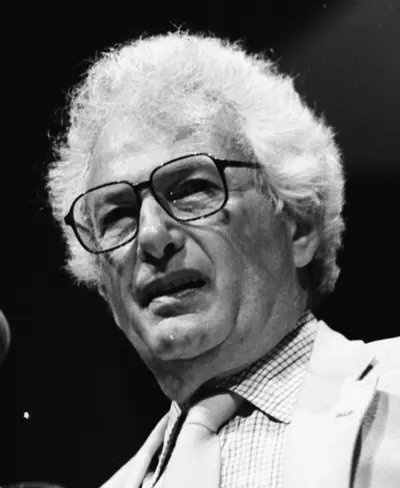
Joseph Heller Quotes


Men," he began his address to the officers, measuring his pauses carefully. "You're American officers. The officers of no other army in the world can make that statement. Think about it.


Citations

Heller, Joseph. Catch-22. Simon & Schuster, 1961, p. 28.

Related Quotes

Would a serious country so completely lose perspective on its own past that it would entertain the idea that the nation was founded on slavery, rather than on the ideals that have made it a beacon to the rest of the world? And would a serious country think it appropriate to teach its children that the nation’s past is best understood as a parade of horrors, to which the most appropriate response is not pride but lacerating shame? … Nobody wants an account of the American past that is sanitized. We are all too aware of our many faults, and most of us understand the importance of owning up to them. But what we have wanted and needed instead is an account that places those faults in proper perspective—that understands them in much the same way that we understand every flawed but admirable person we have ever known and loved. We need to become a serious country again. And to do that, we need to believe in ourselves again, believe in the reason we have been placed here, as a land of hope for a world that needs hope more than ever. We need to understand that a world without America will be immeasurably diminished, both in material and spiritual terms, and that we have no choice but to live up to the responsibilities that come with our many blessings. Our history can be an enormous resource in that endeavor. The work will not be easy. … But it will be much harder to live with ourselves, and with the rebuke of the future, should we shrink from the challenge. And once we understand what is at stake, we may feel a certain exhilaration that comes of knowing what is being demanded of us.


Joseph Heller
Joseph Heller
  • Born: May 1, 1923
  • Died: December 12, 1999
  • Nationality: American
  • Profession: Writer

Joseph Heller was an American author of novels, short stories, plays, and screenplays. His best-known work is the 1961 novel Catch-22, a satire on war and bureaucracy, whose title has become a synonym for an absurd or contradictory choice.