Rupert Brooke Quotes
If I should die, think only this of me: that there's some corner of a foreign field that is for ever England.
Brooke, Rupert. "The Soldier." The Collected Poems of Rupert Brooke. John Lane Company, 1915, p. 112.


Ataturk was a young major at the time commanding troops of a weak and corrupt Ottoman regime. However a combined English and French (the strongest military powers in Europe) invasion of the Gallipoli Peninsula threatened to capture the Turkish capital, Constantinople. Ataturk alone rallied the Turkish defenders and fought the invaders to a standoff in long drawn out battle with huge casualties on both sides. Ataturk became a national hero. Although Ataturk thereafter was very reluctant to use military force or endanger troops, the thing he always thought worth the supreme sacrifice (including his own) was the independence and sovereignty of the nation. See {584502} for his continuing belief in this type of sacrifice.


The King was asking for volunteers for the British Army. What is particularly interesting about this quote is the overt appeal to “men of all classes.” This illustrates that there was an extensive class system then operational in Britain. Almost all people knew to which class they belonged. A very popular King could then make a statement like this and no one was critical of his referring to citizens by class distinctions. Even in modern times, Britain is a more class conscious society than America. The response to this appeal was very good, but the First World War developed in such a way that huge manpower resources were needed and the King had to reluctantly assent to a military draft 7 months later.

Referring to the British war dead:


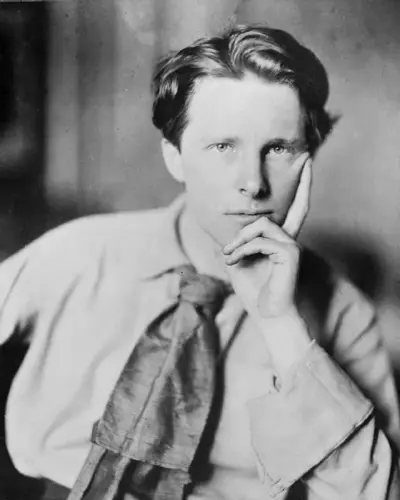
Rupert Chawner Brooke was an English poet known for his idealistic war sonnets written during the First World War, especially The Soldier. He was also known for his boyish good looks, which were said to have prompted the Irish poet W. B. Yeats to describe him as "the handsomest young man in England".
