Imre Lakatos Quotes
Mathematics does not grow through a monotonous increase of the number of indubitably established theorems but through the incessant improvement of guesses by speculation and criticism, by the logic of proofs and refutations.
Lakatos, Imre. Proofs and Refutations: The Logic of Mathematical Discovery. Cambridge University Press, 1976, p. 5.


Feynman generally emphasized the importance of a scientist understanding the mathematics of his/her subject, especially where nature's complexities abounded. At the time few appreciated the importance in the biological sciences of mathematics which we know today is so essential.


This quotation illustrates one of the major reasons politicians and laymen have difficulty making educational policy on mathematics education. It is the laws that govern mathematics and their structure that is most critical, not the ability to calculate and measure although the latter are important and useful by products.

3rd Earl Russell of Kingston. In mathematics the numbers can count people, autos, sins, molecules, or paintings. The mathematician does not know or care. And the mathematics is the same regardless. And the fundamentals themselves are unknown. For example, what is a number? It’s not the symbol we write; that is a numeral. Some say that it is an abstract idea that represents a quantity like 5. But what is 5? That itself is an abstraction. So few mathematicians and no layman know what they are talking about when they do mathematics. Lord Russell, with his colleague Whitehead, built up a system where they could define a number as a set with certain properties. But they take 3 large volumes full of equations in a small type font to just get to 3rd grade arithmetic and knowing what they are talking about. In politics, we also often do not know what we are talking about, but that is for a much simpler set of reasons.

Spinoza’s ideas were considered so radical and dangerous that he was the only man in history who was excommunicated by the Catholics, the Jews and the Muslims.


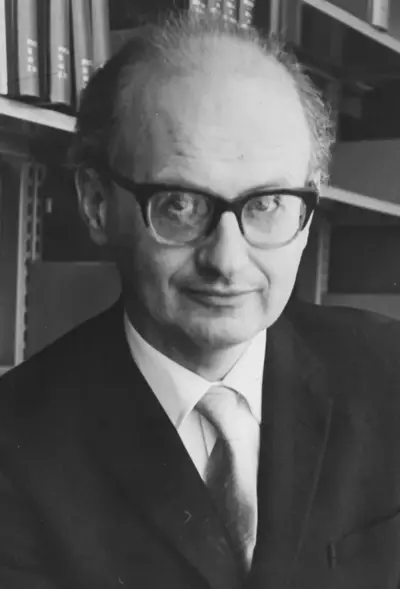
Imre Lakatos was a Hungarian philosopher of mathematics and science, known for his thesis of the fallibility of mathematics and its "methodology of proofs and refutations" in its pre-axiomatic stages of development, and also for introducing the concept of the "research programme" in his methodology of scientific research programmes.
