Ambrose Bierce Quotes
Logic, n. The art of thinking and reasoning in strict accordance with the limitations and incapacities of the human misunderstanding. The basic of logic is the syllogism, consisting of a major and a minor premise and a conclusion - thus: Major Premise: Sixty men can do a piece of work sixty times as quickly as one man. Minor Premise: One man can dig a post-hole in sixty seconds; Therefore- Conclusion: Sixty men can dig a post-hole in one second. This may be called syllogism arithmetical, in which, by combining logic and mathematics, we obtain a double certainty and are twice blessed.
Bierce, Ambrose. The Devil's Dictionary. The Neale Publishing Company, 1911, p. 198.


Feynman generally emphasized the importance of a scientist understanding the mathematics of his/her subject, especially where nature's complexities abounded. At the time few appreciated the importance in the biological sciences of mathematics which we know today is so essential.


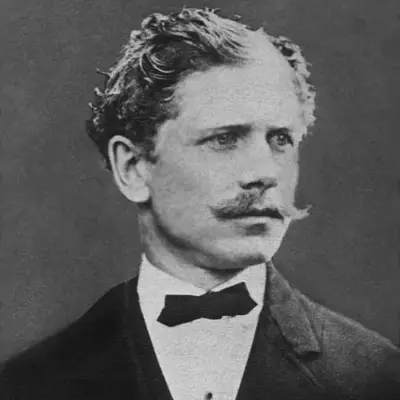
Ambrose Gwinnett Bierce was an American short story writer, journalist, poet, and Civil War veteran. His book The Devil's Dictionary was named as one of "The 100 Greatest Masterpieces of American Literature" by the American Revolution Bicentennial Administration. His story "An Occurrence at Owl Creek Bridge" has been described as "one of the most famous and frequently anthologized stories in American literature"; and his book Tales of Soldiers and Civilians (also published as In the Midst of Life) was named by the Grolier Club as one of the 100 most influential American books printed before 1900.
