Thomas Babington Macaulay Quotes
Many politicians of our time are in the habit of laying it down as a self-evident proposition, that no people ought to be free till they are fit to use their freedom .... If men are to wait for liberty till they become wise and good in slavery, they may indeed wait forever.
1st Baron Macaulay
Thomas Babington Macaulay, 1800-1859, British Historian & Secretary of War (Liberal), Member of Parliament, Milton
Sourced by: Eigen's Political and Historical Quotations

De Tocqueville was generally concerned about what he saw as an inherent conflict between freedom and equality. Efforts to produce equality can lead in some cases to impingements on some freedoms or rights. Unlimited free rights can produce inequality and a de facto autocracy. Even in modern times America is struggling to find a proper balance.


In 1848 a pro-slavery mob in Washington DC Gamaliel Bailey's anti-slavery publication, The National Era, which soon thereafter was the publisher of the serialized Uncle Tom's Cabin. Hale introduced a bill in the Senate outlawing rioting in the District of Columbia. The Southern Senators objected violently and this served as a catalyst for the for the most extensive public debate that had ever been held on the slavery issue. Hale probably intended this. He was the first public anti-slavery Senator.


Although the author was unknown, Cato had a following and his material was very influential.


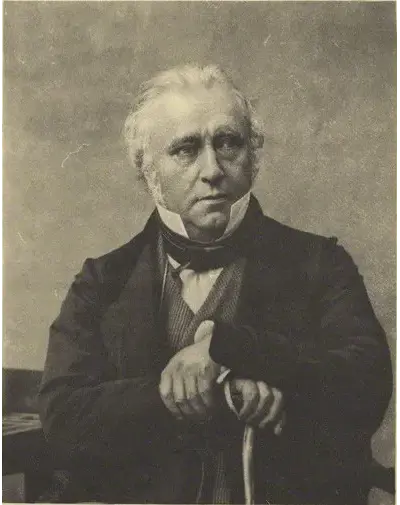
Thomas Babington Macaulay, 1st Baron Macaulay, FRS FRSE PC was a British historian and Whig politician. He wrote extensively as an essayist, on contemporary and historical sociopolitical subjects, and as a reviewer. His The History of England was a seminal and paradigmatic example of Whig historiography, and its literary style has remained an object of praise since its publication, including subsequent to the widespread condemnation of its historical contentions which became popular in the 20th century.
