Gene Luen Yang Quotes
Many Japanese families moved to Taiwan during the occupation. Then, when the war ended, they were forced to move back. And at the macro level, the Taiwanese had every reason to cheer when the Japanese left. The Japanese military could often be incredibly brutal. The Taiwanese lived as second-class citizens on their own land.
Yang, Gene Luen. Interview. The Rumpus, 16 Oct. 2013.


This quotation has been used by many criticizing the policy of massive bombing of Japanese Cities towards the end of the war. At first it appears that there was a racist disregard for Japanese Civilian lives. However there was legal logic. The Japanese had already bombed cities throughout Asia and did not adhere to the rules of war. The Japanese government “invited” all Japanese to join the military to defend the homeland to the death in the coming invasion. All adult civilians were mobilized. There were no adult civilians left in Japan. Perhaps more important was the industrial organization of Japan which exists in large part to this day. There were tens of thousands of small & tiny factories distributed throughout all the Japanese cities. These were distributed in civilian areas & in many cases were actually in homes to take advantage of available labor and not have to transport people. There was no way to bomb the munitions factories without bombing civilian neighborhoods.

This quotation is important because the American public and their leaders saw only one course of action—invasion of the Japanese Mainland. The debate was whether to attempt the invasion right away or bomb and blockade Japan into destruction and starvation weakening the population so their resistance would not produce the kind of casualties that we had experienced with the Invasion of Okinawa. The bombing and blockade strategy was selected and 80 percent of Tokyo was obliterated. Yet the Japanese refused to surrender even after all its manufacturing capability was destroyed and the agriculture was beginning to be destroyed. Most Americans did not realize it but the atomic bomb was being made ready for use. After the test bomb in New Mexico, we had enough fissionable material for 2 bombs and it would take several months for each additional bomb. The use of the atomic bomb at the time seemed not much different from the massive bombing that had already taken place. More Japanese were killed in some of these conventional bombings than with the Atomic Bomb. The key believe was that the Japanese would not give up. After the first A bomb, they still would not surrender, and when the Emperor decided on surrender after the 2nd bomb, there was a military insurrection in the palace to stop the Emperor’s surrender message to the people from being broadcast. It was just minutes too late, and the Emperor had to be obeyed. Invasion, with its terrible casualties—many more than the atomic bombs—was unnecessary.


Greece had always coveted Anatolia which was a part of the Ottoman Empire but had been in antiquity a Greek dominated area. Further, people of Greek ethnicity and culture, who hundreds of years ago used to be the vast majority were, after the hundreds of years of Ottoman rule and migration, were then the largest minority in Anatolia. The Turks lost the First World War as a consequence of their allying with Germany, and had been stripped of their vast Arab territories. Also, Turkey had just undergone a revolution and the old order was displaced. Greek Nationalist Prime Minister Venizelos saw this as an opportunity to get back Anatolia and sent a military invasion force to land at Smyrna (Ismir to the Turks), the largest city of Anatolia where despite the Greek minority in all of Anatolia, Greeks were a small majority in Smyrna. The invasion was initially successful but was then repulsed by the Turk revolutionists lead by their great patriot Ataturk who counterattacked and defeated the Greek forces handily despite the fact that they were hastily organized, untrained together, and much more poorly equipped than the Greeks. However, the Greeks in their retreat, followed a scorched earth policy and as this quotation shows, committed many atrocities against the Turkish civilian villages.


The Wars continued over a decade, costing thousands of American (and Coalition) troops their lives, many more their limbs and mental well-being, with a monetary cost of over trillions of dollars, and the achievements have been few and meager.
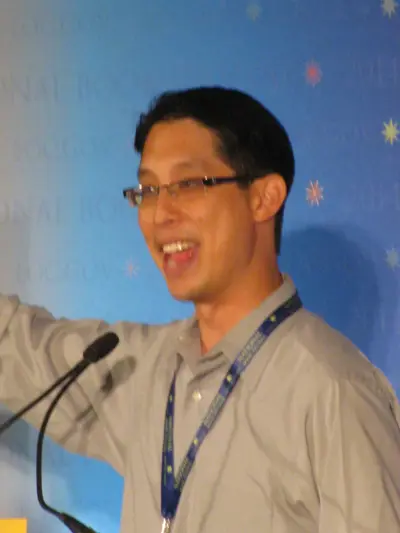
Gene Luen Yang is an American cartoonist. He is a frequent lecturer on the subjects of graphic novels and comics, at comic book conventions and universities, schools, and libraries. In addition, he was the Director of Information Services and taught computer science at Bishop O'Dowd High School in Oakland, California. In 2012, Yang joined the faculty at Hamline University, as a part of the Low-Residency Master of Fine Arts in Writing for Children and Young Adults (MFAC) program. In 2016, the U.S. Library of Congress named him Ambassador for Young People's Literature. That year he became the third graphic novelist, alongside Lauren Redniss, to receive the MacArthur Fellowship.
