Bruno Schulz Quotes
Man was entering under false pretenses the sphere of incredible facilities, acquired too cheaply, below cost price, almost for nothing, and the disproportion between outlay and gain, the obvious fraud on nature, the excessive payment for a trick of genius, had to be offset by self-parody.
Schulz, Bruno. The Street of Crocodiles. Translated by Celina Wieniewska, Penguin Books, 1977.


In the ensuing few years hundreds of “witches” were burned at the stake and suffered death in other horrible ways.


The States sold bonds to finance the Revolutionary War. Some states had better prospects for redeeming their bonds than others. Georgia, South Carolina and North Carolina in particular had poorer prospects than most and their bonds were selling at about 25 cents on the dollar. Alexander Hamilton, then the Secretary of the Treasury, wanted the new Federal government to assume the state’s war debt and pay off the bonds. He made his proposal for how he would accomplish this on January 14, 1790. He delivered his report and proposal to Congress “Report on the Public Credit”. As soon as Hamilton’s proposal was read in Congress, sophisticated speculators set off for the Southern States to buy up as many bonds as they could before the owners found out that a Federal bail-out was under serious consideration. They could easily double, triple or even quadruple their money. To Jackson this was gross immorality. Other representatives had a different point of view. See {619928} & {619929}.

Some people erroneously claim that Clement Atlee was the target of this insult. He was not according to Churchill himself.

Hopkins was asked how he managed to contend with the infighting of some of the more experienced, less than ethical political types in the government:


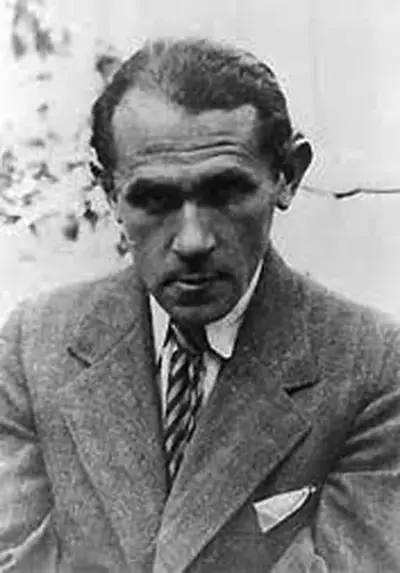
Bruno Schulz was a Polish Jewish writer, fine artist, literary critic and art teacher. He is regarded as one of the great Polish-language prose stylists of the 20th century. In 1938, he was awarded the Polish Academy of Literature's prestigious Golden Laurel award. Several of Schulz's works were lost in the Holocaust, including short stories from the early 1940s and his final, unfinished novel The Messiah. Schulz was shot and killed by a German Nazi, a Gestapo officer, in 1942 while walking back home toward Drohobycz Ghetto with a loaf of bread.
