George Berkeley Quotes
Man is an Animal, formidable both from his Passions and his Reason; his Passions often urging him to great Evils, and his Reason furnishing Means to achieve them. To train this Animal, and make him amenable to Order; to inure him to a Sense of Justice and Virtue, to withhold him from ill Courses by Fear, and encourage him in his Duty by Hopes; in short, to fashion and model him for Society, hath been the Aim of civil and religious Institutions; and, in all Times, the Endeavour of good and wise Men. The aptest Method for attaining this End, hath been always judged a proper Education.
Berkeley, George. A Discourse Addressed to Magistrates and Men in Authority. George Faulkner, 1738, p. 5.


There are a number of reasons for punishing someone for violating a law. Confucius argues that when the person will no longer continue to commit the crime, further punishment is uncalled for. However, others would argue that there are other reasons to keep punishing a person including retribution / vengeance, incapacitation (people can’t commit crimes if they are in jail), and prevention (make an example to discourage others).

The English law was, for many years, not taught in English Universities.

Some southerners had gotten out of the Confederate chain of command and were attacking civilian steamboats killing Southerners as well as “Yankees”. See {633900} . While Sherman had trouble with some of his own men on parts of his March Through Georgia, at this time, it was Southerners who were acting independently and improperly. Legally, the Confederates were responsible for any people committing terror. Sherman tried to persuade the Confederate commanders with letters like this, but was very quick to retaliate for every violation. He also complained to some Union officers that they were not moving quickly enough to retaliate and prevent future behavior--{584048}


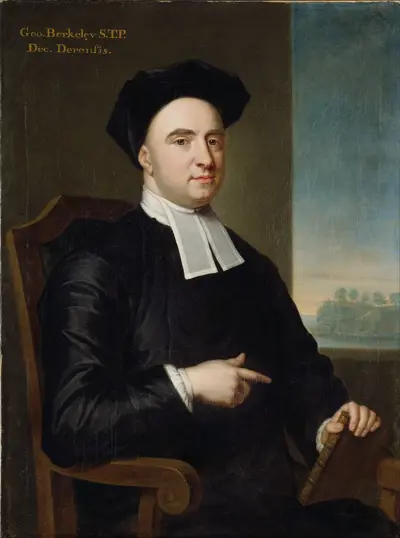
George Berkeley – known as Bishop Berkeley (Bishop of Cloyne of the Anglican Church of Ireland) – was an Anglo-Irish philosopher whose primary achievement was the advancement of a theory he called "immaterialism" (later referred to as "subjective idealism" by others). This theory denies the existence of material substance and instead contends that familiar objects like tables and chairs are ideas perceived by the minds and, as a result, cannot exist without being perceived. Berkeley is also known for his critique of abstraction, an important premise in his argument for immaterialism.
