Chanakya Quotes
Love or affection towards an individual or nation, is indicated by good action snot merely be words. The adoration towards nation is expressed by works of welfare equally done by the ruler and theruled. The ruler himself must be engatged, in welfare of th country and also should select officials examining their involvement with the public god. Self-centered people greedy of the power should be kept away
Chanakya. Chanakya Neeti. Translated by B. K. Chaturvedi, Diamond Pocket Books, 2001.


This may be Kennedy’s most famous line. However he was not the first orator to express this idea however. See Khalil Gibran {601423}, Warren G. Harding {622594} and {629021}, St. John Broderick {595734}, and Oliver Wendell Holmes Jr. {603707} for earlier expressions of similar sentiments. Holmes seems to be the first to express the idea while the earliest seems similar phraseology seems to be the British Politician St. John Broderick in 1893 {595734}. Although, these earlier expressions existed, Theodore C. Sorensen, who assisted Kennedy with this speech and wrote the draft, had distilled it from earlier expressions and views of JFK and said that these were Kennedy’s words. At the time, he stated that was unaware of the Gibran, Harding, Broderick and Holmes sentiments. Gibran had not yet even been translated into English. However it is not clear whether Kennedy himself had inadvertently recollected the phrase from any of the other quotations. (The question was never put to him.) The St. John Broderick quotation is a possible source. Kennedy was quite familiar with British political history, and his father and been U. S. Ambassador to Great Britain. Regardless, the quotation was as great for the place and timing—his inaugural—as it was for the phraseology which might have originated elsewhere.


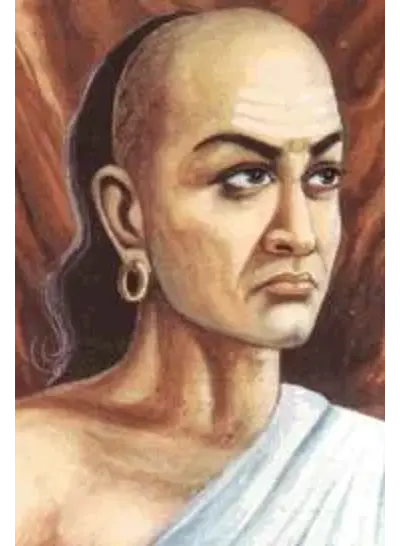
Chanakya (IAST: Cāṇakya, pronunciation (help·info)) was an ancient Indian teacher, philosopher, economist, jurist and royal advisor. He is traditionally identified as Kauṭilya or Vishnugupta, who authored the ancient Indian political treatise, the Arthashastra, a text dated to roughly between the 4th century BCE and the 3rd century CE. As such, he is considered the pioneer of the field of political science and economics in India, and his work is thought of as an important precursor to classical economics. His works were lost near the end of the Gupta Empire in the 6th century CE and not rediscovered until the early 20th century.
