Frances Burney Quotes
Look at your [English] ladies of quality are they not forever parting with their husbands - forfeiting their reputations - and is their life aught but dissipation? In common genteel life, indeed, you may now and then meet with very fine girls - who have politeness, sense and conversation - but these are few - and then look at your trademen's daughters - what are they? poor creatures indeed! all pertness, imitation and folly.
Burney, Frances. The Early Diary of Frances Burney, 1768-1778. Edited by Annie Raine Ellis, vol. 1, George Bell and Sons, 1889.


This is a very interesting historical quotations in that it describes the family culture of an important subset of Americans in the early 19th century. The Duena (chaperone) was a middle aged woman who would always accompany young, unmarried women whenever they left the home. A young man who would take a young lady for a carriage ride or anything else, would also have to take the duena.


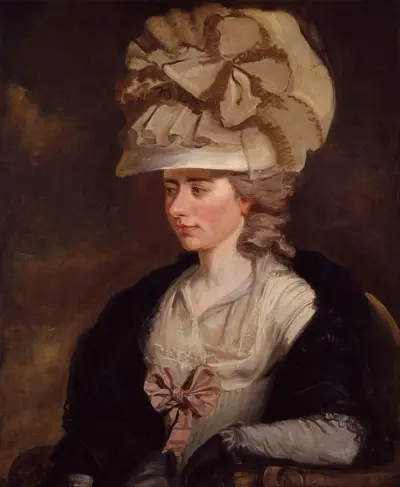
Frances Burney, also known as Fanny Burney and later as Madame d'Arblay, was an English satirical novelist, diarist and playwright. Born in Lynn Regis, now King's Lynn, England, on 13 June 1752, to the musician Dr Charles Burney (1726–1814) and his first wife, Esther Sleepe Burney (1725–1762), she was the third of her mother's six children. She began her "scribblings" at the age of ten. In 1786–1790 she held an unusual courtier appointment as "Keeper of the Robes" to Charlotte of Mecklenburg-Strelitz, George III's queen. In 1793, aged 41, she married a French exile, General Alexandre D'Arblay. Their only son Alexander was born in 1794. After a long writing career, and travels in which she was stranded in France by warfare for over ten years, she settled in Bath, England, where she died on 6 January 1840. Of her four novels, the first, Evelina (1778), was the most successful, and remains the most highly regarded. Most of her plays remained unperformed in her lifetime. She also wrote a memoir of her father (1832) and many letters and journals, which have been gradually published since 1889.
