Gilles Duceppe Quotes
Look at what has occurred in history. When the Berlin Wall fell, it was not surprising, but it was unexpected. Who predicted the Arab Spring? Nobody expected it, but all the ingredients were there. I think all the ingredients are also there for Quebec to become a country. But when? That's another question.
The Canadian Press. "Bloc's Gilles Duceppe says conditions right for Quebec independence." CBC News, Canadian Broadcasting Corporation, 11 Aug. 2015.


Indeed, many of the countries went communist as Kennan predicted.


After the first Arab Spring revolution ousting Mubaric, a military dictator, the Egyptians elected a leader, Morsi, of the Muslim Brotherhood. Morsi then abused his powers and tried to turn Egypt into a theocracy. Huge popular protests against the Muslim Brotherhood led to el-Sisi leading a military coup where the army took over the government. Then they held elections, el-Sisi resigned from the military, and ran for President and won by a large percentage even though a small proportion of the population voted.


In most revolutionary settings leaders have to persuade people who have voted with no success to turn to the rifle. In Ireland at this point, almost all the nationalsits knew that the rifle would help them but they were not sure that a vote would have the effect of a bullet.

He was addressing the Conservatives of Ulster, the Northern Ireland province that was the center of the Orangemen movement of Irish Protestants who were fighting to retain 'Protestant Ascendency' -- which was the social, political and cultural domination of the Protestants (the minority) over the Catholics (the majority). This was best achieved by keeping Ireland a part of Great Britain as opposed to having Ireland as a separate, independent country.
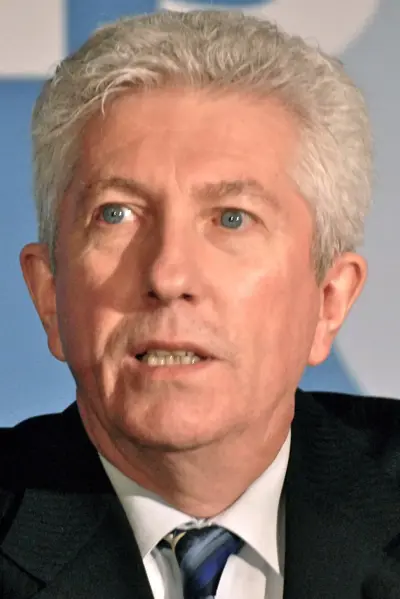
Gilles Duceppe is a Canadian politician, proponent of the Quebec sovereignty movement and former leader of the Bloc Québécois. He was a Member of Parliament in the House of Commons of Canada for over 20 years and has been the leader of the sovereigntist Bloc Québécois for 15 years in three stints: 1996, 1997-2011 and in 2015. He was Leader of the Official Opposition in the Parliament of Canada from March 17, 1997, to June 1, 1997. He resigned as party leader after the 2011 election, in which he lost his own seat to New Democratic Party (NDP) candidate Hélène Laverdière and his party suffered a heavy defeat; however, he returned four years later to lead the party into the 2015 election. After being defeated in his own riding by Laverdière again, he resigned once more.
