Jeremy Bentham Quotes
Liberty of public association; or the security with which malcontents may communicate their sentiments, concert their plans, and practice every mode of opposition short of actual revolt, before the executive power can be legally justified in disturbing them
Jeremy Bentham, 1748-1832, British Jurist & Philosopher, Fragments on Government, 1776
Sourced by: Eigen's Political and Historical Quotations


The Nazis were banned from demonstrating in the streets of Skokie, Illinois on the grounds that they would incite violence. However, Goldberger of the ACLU took their case and won their right to spew their hatred before the Supreme Court.


This is a classic Egyptian political technique. Egyptian political leaders espouse democratic values and endorse human rights, but control and regulate the actual exercise of rights so that “unacceptable” groups or people can never really assemble or protest. They make an application to demonstrate and find themselves arrested or “detained” so the Egyptians can say that no one is refused the right to assemble. Their permit was not denied.


Nixon’s views of free speech rights did not recognize the right of those who advocate revolution or government or system change in America. By his standard all of the Founding Fathers should not have been entitled to most of their early speeches. The Supreme Court repeatedly rejected his standard, distinguishing between speech to change or reform the government and illegal action to bring those changes about.

It is ironic that Pakistan, the creation of Jinnah’s efforts, has to a great extent adopted Sharia (Islamic Law) resulting in severe curtailment of freedom of speech and thought. Professors languish in jail for not teaching the history of Muhammed in the orthodox way, people are sentenced to death for what the local mullahs regard as blasphemy—results which from Jinnah’s point of view were terrible.


This quotation was used ten years later by Virginia which, in convention, passed a resolution objecting to the Alien & Sedition Acts. The drafter of the original resolution was James Madison.


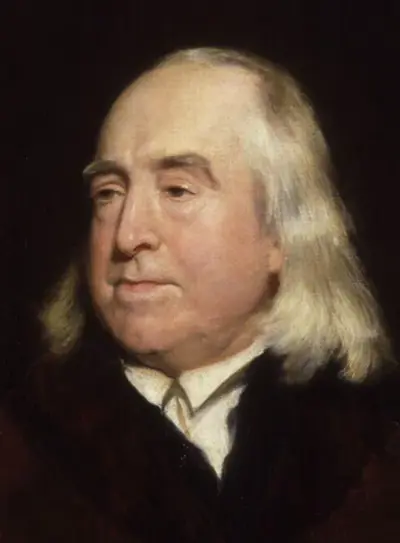
Jeremy Bentham was an English philosopher, jurist, and social reformer regarded as the founder of modern utilitarianism.
