Ralph Webster Yarborough Quotes
Let's put the jam on the lower shelf so the little people can reach it.
Ralph Webster Yarborough, 1903–1996, U. S. Senator (Democrat, TX), Campaign Slogan
Sourced by: Eigen's Political and Historical Quotations


It became a slogan and rallying cry for Long and his followers.

His opponent was Al Gore Sr. whose wife came up with the idea of placing signs underneath the McKeller signs saying, “Think Some More and Vote For Gore!”

Actually originated by William Jennings Bryan in a 1900 campaign speech. See {640984} . The slogan became the name and first line of a poem and also a song. See {609937}


Nethercutt also ran on a term-limit concept which he repudiated as soon as he was term-limited. Also, after extolling the virtues of a representative who listens, see his quotation on his independence from public opinion: {628257}

In the late 1950s British Prime Minister adopted the line to trumpet his accomplishments to the British electorate. President Lyndon Johnson revived the slogan in the 1960s and used it on many occasions.


Debbs had been jailed for speaking out against the First World War. The Espionage Act forbade anyone from criticizing the war effort. (See {585905}). Later it was to be declared unconstitutional. However, Debbs had gotten more than 5 percent of the vote in 1912, competing against Wilson, Taft and Teddy Rosevelt. (There were 2 “third party candidates” in that election.) So Debs ran again in 1920. However, he was in jail. So he used the fact as a slogan. Amazingly, he actually obtained over 3 percent of the vote without ever leaving his jail cell. Later, President Warren G. Harding not only pardoned Debbs, but entertained him at the White House the next day.


The Muslim League at the time was made up of Indian Muslim intellectuals, professionals, and business people. Yet most of the Muslims were in abject poverty.


The '44 referred to the 1844 election of James K. Polk as president.
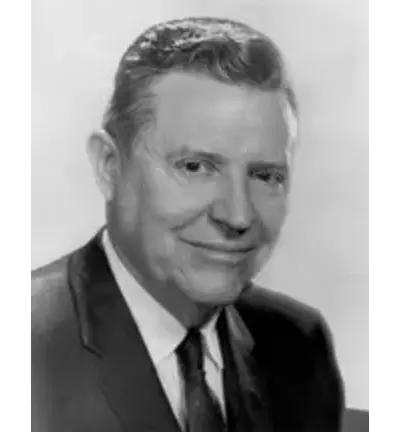
Ralph Webster Yarborough was an American politician and lawyer. He was a Texas Democratic politician who served in the United States Senate from 1957 to 1971 and was a leader of the progressive wing of his party. Along with Senate Majority Leader Lyndon B. Johnson and Speaker of the House Sam Rayburn, but unlike most Southern congressmen, Yarborough refused to support the 1956 Southern Manifesto, which called for resistance to the racial integration of schools and other public places. Yarborough voted in favor of the Civil Rights Acts of 1957, 1960, 1964, and 1968, as well as the 24th Amendment to the U.S. Constitution, the Voting Rights Act of 1965, and the confirmation of Thurgood Marshall to the U.S. Supreme Court. Along with Stuart Symington of Missouri and Mike Monroney of Oklahoma, Yarborough was one of only three Southern senators to vote for all five bills.
