Edward Abbey Quotes
Let us hope our weapons are never needed - but do not forget what the common people of this nation knew when they demanded the Bill of Rights: An armed citizenry is the first defense, the best defense, and the final defense against tyranny.
Abbey, Edward. Abbey's Road. E. P. Dutton, 1979.


It would be more than a decade before the phrase “well regulated militia” would be added into the Constitution as the 2nd Amendment of the Bill of Rights. This resolution was the last of several passed at this meeting by which Maryland endorsed resistance to the British. So these resolations would have been widely distributed throughout the colonies and known by the leaders. In 1788 Alexander Hamilton Published Federalist 29 which also used the phrase. (See {588393}.) Then on September 25, 1789, the Congress proposed the Bill of Rights and the 2nd Amendment using the same key phrase, “well regulated militia.” Whether the drafters of the 2nd Amendment got the phrase from Hamilton’s Federalist 29 or from the Maryland Resolutions is not known but Hamilton’s was much more current. Did he get the phrase from Maryland? Did Congress get it from him? Did Maryland originate the phrase or was there an earlier use that influenced the Maryland drafters? At this point no one is sure, but the phrase is critical to the meaning of the 2nd Amendment because the Supreme Court has repeatedly held that the Second Amandment does not apply to individuals but only to the State’s right to bear arms within the “well regulated militia” and not as individual citizens. The right is that of the State government and that is why a state can control guns including banning them if they choose. So an individual in America does not have the constitutional right to bear arms. He may have a state constitutional right but in other states he may not use a gun in certain places and may not possess certain types of guns like hand guns which are illegal in New York, Washington DC and some other places.


The Kandahar region of Afghanistan was occupied by the Persians under Gurgin Khan. The Persians at the time were Shiite Muslims while the Afghans were Sunnis. Gurgin Khan forced all the Sunnis to convert to become Shia under threat of death. Mirwais Hotak led a force of freedom fighters, and defeated the Persians, killing Gurgin Khan in the process. There were some Afghan people who by collaborating with the Persians had done very well for themselves. They were anxious about their liberator and some were thinking about sneaking away and joining up with the Persians. He then made this speech, remarkable for any time, and especially so at the early 18th century. Notice, that unlike most other peoples of the Middle East, the Afghan’s placed a high value on freedom, and were willing to fight for it. In that sense, Afghanistan was culturally and politically different from the rest of the Islamic world.


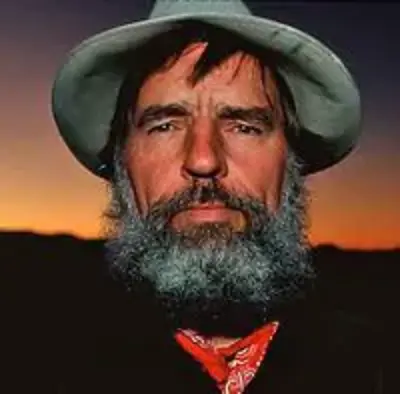
Edward Paul Abbey was an American author and essayist noted for his advocacy of environmental issues and criticism of public land policies. His best-known works include Desert Solitaire, a non-fiction autobiographical account of his time as a park ranger at Arches National Park considered to be an iconic work of nature writing and a staple of early environmentalist writing; the novel The Monkey Wrench Gang, which has been cited as an inspiration by environmentalists and groups defending nature by various means, also called eco-warriors; his novel Hayduke Lives; and his essay collections Down the River (with Henry Thoreau & Other Friends) (1982) and One Life at a Time, Please (1988).
