Mahatma Gandhi Quotes
Let not the 12 million Negroes be ashamed of the fact that they are the grandchildren of slaves. There is dishonor in being slave-owners.
Gandhi, Mahatma. Harijan. 14 Mar. 1936.


It was referred to as the author as the “Negro National Hymn,” and adopted by the NAACP as its official song. Many erroneously believe that the song was an outgrowth of the Civil Rights movement of the 1960’s, but it was commonly sung by Blacks, especially throughout the South even shortly after it was written. Many whites began to hear it during the Civil Rights Movement.

The issue of slavery which had been suppressed in Congress for the first decades of the nation broke out when Missouri statehood was considered. By previous agreement, slavery was not even discussed in Congress but the time period elapsed. Tallmadge not only proposed that no more slaves could come into Missouri {613176} but most shocking to the Southerners was that every person born in the new state would be free at the age of 25. In a generation, there would be no more slavery in Missouri and there would be no economic compensation for slave owners at all. The House of Representatives accepted the amendment, but it failed in the Senate. At that time, Senators were not elected by voters but were appointed by the state legislators and the Southern slave states had a disproportionate share of the senate from a population point of view. But what this quotation shows clearly that a majority of the country in 1819 were opposed to slavery and were willing to end it without compensation.


Bruce was the first, and through the 20th Century, and only Black Senator from Mississippi. He was the first Black Senator to serve a full term. Elected during reconstruction, he was the voted out of office when Blacks were prevented from voting. See {625745}.

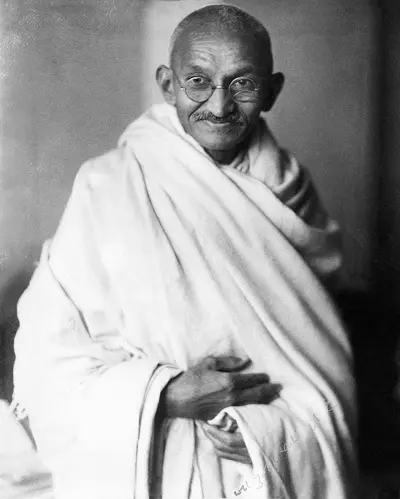
Mohandas Karamchand Gandhi was an Indian lawyer, anti-colonial nationalist, and political ethicist, who employed nonviolent resistance to lead the successful campaign for India's independence from British rule, and in turn inspired movements for civil rights and freedom across the world. The honorific Mahātmā (Sanskrit: "great-souled", "venerable"), first applied to him in 1914 in South Africa, is now used throughout the world.
