Arthur Alfonso Schomburg Quotes
The American Negro must remake his past in order to make his future ... History must restore what slavery took away
Arthur Alfonso Schomburg, 1874-1938, Historian & Bibliophile, Co-Founder, Negro Society for Historical Research, Quoted in AfricaWithin.com, April 9, 2004
Sourced by: Eigen's Political and Historical Quotations


For many years after the Civil War, in an effort to dignify the Southern rebellion, it was fashionable to ignore or skim over the institution of slavery in American history. Government, in particular regarded the issue as divisive even a century after the Emancipation Proclamation.

While this assessment was true up until the 1980s. By the 21st century there were almost no serious historians who thought that the motivation of the Confederate States for the Civil War was anything but slavery and the economic impact that abolition might bring. However, one of your advantages having this collection of historical quotations is that you can see for yourself why the Southern states say they were seceding. This following are four of the official secession resolution documents. Read these and you will see that all the claims that there were other major reasons for secession are just attempts to make the Confederacy a little less brutal and greedy. See {621371}, {619793}, {621372}, {621375}


After the Civil War and Reconstruction, the American nation was still bitterly divided intelelctually, socially, emotionally and poliotically. In an effort to bring more unity to America, most of the power stucture and the influentials of the nation began to avoid those issues that would divide North and South and try and promote a narrative that both sides might be able to live with. And this is what Zeitz describes in this quotation. America went through a period of Revisionist History that even in the 21st century was held by many people. It wasn't until the middle of the 20th century that the real history and narrative of the Civil War and Reconstrution emerged from the few academics who had all along criticized the fabricated narritive that did unify the country at the cost of historical accuracy and truth. Many scholars point out that the price that America paid for this unity was the Jim Crow era and a century of legalized racism. Much of the nation was built on the labor of Negro slaves and the victims of the slavery era, also bore the brunt of American unity and reconcilliation.
This is an example of how values in politics can get complex. Family Leader put together The Marriage Vow, a pledge it wanted political candidates to sign. The pledge dealt with marital fidelity and other traditional family values. Two Republican Presidential Nomination Candidates signed the pledge rapidly as many of their competitors had notorious affairs and/or had been divorced. The 2 signers thought that they would obtain a substantial advantage. However, another part of the pledge was dealing with the importance of children being brought up in a 2 parent home, The quotation gives their statement on Black families and illegitimacy. However, they organization was so hung up on the evil of children in single parent households, that they said in the pledge that Blacks were better off under slavery than they are under Barack Obama—the first Black President. As might have been expected, there were no Blacks and even very few racist whites who would claim Black children and families were better off under slavery. They two politicians, Michelle Bachman and Rick Santorum—neither very sensitive to minority issues and perceived by most Blacks as racists—began to back away from their signing, First Leader, then removed the quoted paragraph from all copies of the signed pledges and removed it from their website. However, original copies—including the quoted paragraph—got into the hands of the media and the scandal began. Family Leader, trying to do damage control, wisely apologized. The other Republican Presidential aspirants both monogamous and otherwise, refused to sign but what it is that made them refuse was probably different for each person.

There was a huge amount of racial interbreeding during the early slavery times of America. Some was consensual as people will be people, but much was the rape of Black slaves my white masters—a concept that was never considered rape by law as one cannot commit a crime against one’s own property. The result after time was every possible combination of white/black mixture. There were names for many of the combinations: Quadroons were one fourth Negro. Octaroons, one-eighth. During and after reconstruction, for purposes of discriminatory law, who was a Negro? The Louisiana “one drop rule” said that if there was ANY trace of Negro ancestry, that person was a Negro and would be discriminated against. Of course, what would happen was that many mixed race children were light skinned and looked white and many were black and all shades in between. It was relatively easy for the lighter skinned “one drop” Negroes to pass as white especially if the left the state. But if anyone accused them of being Negro, they would have been guilty of committing crimes. Some in modern times have little comprehension of how the white plantation slave owners and other whitrd could condemn their own children to a second class life of vicious discrimination, but that is exactly what they did. The great irony here lies with the modern KKK, Nazi, and other White Supremacy Groups. They still hold to the “one drip rule for their viciousness. However, under the one drop rule, almost all of them would be Negroes if they went back far enough, and ALL ARE BLACK under the one drop rule as with modern DNA and genetic analysis, we now know that every human alive today emanated from a Black woman in Africa.


This idea has been rejected by American Blacks from before the Civil War. There were many Black families that have been in America longer than Rockwell who always had the choice to go back to where they cam from if they were unhappy with America but they never did.
This quotation was a the description of the nail manufacturing operation using slave labor on Thomas Jefferson’s plantation, Monticello. Note the almost romantic scene that the author paints of slavery and forced child labor. That is why this is a very important quotation. This biography of Jefferson, written for a young audience, was typical of material written about the South and slavery from the late 19th century till the late 20th century. The South was still resentful about losing the war, and there was still, late in the 19th century, negative feelings in the rest of the nation about the South’s lack of patriotism and worse their basic morality of having not only supported but fought to maintain the cruel, evil institution of slavery. Many wanted to get these sectional feelings behind them and move forward. One way was to do much revisionist history about the institution of slavery and the reasons for the Civil war. Books, plays, and later films, and the school curricula, were designed to edit out or minimize the brutality and cruelty of slavery. And the reasons for the Southern rebellion was not any longer only to maintain slavery, but more palatable, almost noble reasons were substituted for the reality that slavery was the only major reason for the Southern rebellion. Maintaining a different culture and way of life, freedom from Federal intrusion in state and local affairs, honor and others were then new given reasons, and the problems of Reconstruction for the South exaggerated to justify the then Jim Crow American era of legal discrimination and lynching. This passage came from a book that was so popular with young people, that it was published again in a new edition as late as 1961. Most white Americans, growing up in the 20th century learned this version of events and many vestiges of it could be seen, even in the 21st century. In the 1970s, with an end to legal segregation, attention turned to the culturally and historically distorted views, and slowly schools began to change curricula. However, in the Southern States, in order to prevent the schools from departing from the false, romantic view of Southern Slavery, local schools where not allowed to select their own textbooks and in many cases even their own library books.

For more about the Bureau. See {629186} and {629187}.
For more about the Bureau. See {629185}.and {629187}.

He was a deeply religious Christian which is one of the reasons that he was appointed to head the Freemen’s Bureau to integrate the emancipated slaves into society. Howard University was named for him, and he served as its First President. For more about the Bureau. See {629185}.and {629187}.

Christian had just briefed the President about the riots in many cities after the assassination of Martin Luther King. Christian had expressed surprise that the Blacks were so violent.


The president was commenting on a Donald Trump campaign statement that African American were in the worst shape in history when the reality was just the opposite
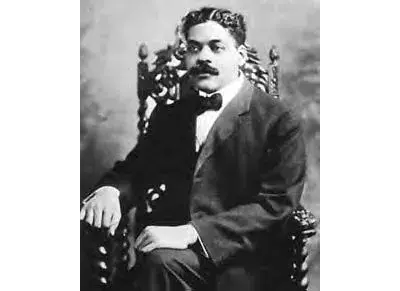
Arturo Alfonso Schomburg, was a historian, writer, collector, and activist. Schomburg was a Puerto Rican of African and German descent. He moved to the United States in 1891, where he researched and raised awareness of the great contributions that Afro-Latin Americans and African Americans have made to society. He was an important intellectual figure in the Harlem Renaissance. Over the years, he collected literature, art, slave narratives, and other materials of African history, which were purchased to become the basis of the Schomburg Center for Research in Black Culture, named in his honor, at the New York Public Library (NYPL) branch in Harlem.
