Andries Stockenstrom Quotes
Let me tell you this—and you may rely upon it, my dear friend—we will never again see the day when under British rule different degrees of rights and privileges will exist for different classes of His Majesty’s subjects.
Andries Stockenstrom, 1792-1864, Governor of Eastern Cape Province of South Africa, Letter to N. T. van der Walt, ~1826
Sourced by: Eigen's Political and Historical Quotations

The power structure of England and the English administrators of South Africa were strong advocates of racial equality at the beginning of the 19th century. They insisted on equal administration of law. However the Boer white population could think of nothing more absurd. In a sense the Boers were much like the Southern Whites at the same time. The South African government however could not enforce its equality policies in the rural area – the majority of South Africa at the time. When democracy and self rule came to South Africa, the racially moderating force of the English was minimized and the majority of South Africans wanted a racially segregated society. Apartheid resulted.

The Boers were lower class, uneducated, farmers from Holland who came to South Africa before the English did. They were at the bottom of the Dutch socioeconomic ladder. Unlike the English who were interest in establishing a trading colony, the Boers just wanted to own and farm the land and use blacks as slave or cheap labor. The Dutch Government and Trading companies lost interest in South Africa as there were much more profitable parts of the world, and they felt no obligation to the Boers whom they were glad to be rid of. So the Boers found themselves having to follow the British laws and rules of the British Colonial Office. Slavery was outlawed, and Blacks could be educated and become citizens under British law. They could own land, and contest the right of the Boers who had settled in some uninhabited land and some that was owned by Black tribes. The Blacks outnumbered the whites in general and the Boers, and there were educated Blacks who “outclassed” the still relatively uneducated Boers. So the Boers, fighting for their “way of life” set up their own area in Southern Africa and claimed independence. But Blacks claimed that it was their land and looked to the British to exercise English law. The Boer war ensued. Although the Boers lost the war, the bred at a much faster rate than the English, many of whom did not even have their families in South Africa. By the end of WWII, the Boer white majority controlled the government and kept the majority Blacks from voting and having full citizenship rights. They dominated Apartheid South Africa until the Black Revolutionists obtained control and although Black and white relations are better in South Africa than most countries, the extemeist Boers and most militant Blacks are in political, but not violent, conflict. Churchill and the British have always perceived themselves as being caught in the middle between the Boers and the Blacks.


In the 1930s African Americans who traveled were subject to countless humiliations whenever the sought hotels, rooming houses, restaurants and other accommodations. Gas stations would not allow them to use bathrooms and they were reduced to using open fields. Traveling and vacationing was, for Blacks, humiliating. Wikipedia: “Green reviewed hotels and restaurants that did business with African Americans during the time of Jim Crow laws and racial segregation in the United States. He printed 15,000 copies each year. In the 1930s, Green began his work by compiling data on stores in the New York area that accepted black travelers, and published his first guide in 1936. Similar guides had been published for Jewish travelers, who sometimes faced discrimination. Green's guide was so popular that he immediately began to expand its coverage the next year to other US destinations, adding hotel and restaurants as well.”


In that year he resigned from the War Department in protest of the discrimination and racism in the armed forces.

White Africaners were slaughtering Blacks to appropriate their land in violation of English law. See {583901} for a related quotation.

The Boers, the early Dutch settlers to South Africa were a “scurvey lot” who were very uneducated, narrow minded, and insular. They eventurally esterminated whole tribes of Blacks, caused the Boer War, and operated the disasterous apartheid era of South Africa. But the early Dutch governors of South Africa had great trouble with the Boers as well. See {583928} & {583928} for English similar assessments.
Description of the Dutch Reformed Church in South Africa in the 1730’s

The White Africaners were attacking the Blacks to force them off their land so the Afrkaners could take over. The country was under British rule and the unarmed Blacks were being slaughtered by the Afrikaners who were British Subjects. Eventually the Boer War set the English against the Afrikaners. See {583902} for a related quotation.
The Boers were generally furious because the British emancipated the Blacks that the Boers were holding as slaves. This hurt their economic interests. But according to this woman in the middle of it all, the worst of it was the insult of giving the Blacks political and functional equality. This was really very similar to most American Southern racist feeling during Reconstruction. Racism is very pernicious, in that the remedies always bring about insult and anger because the belief structure of slavery and discrimination must be based in a theory of inferiority.

The highway was planned to go through a poor neighborhood which had a high percentage of Black residents—all of whom would have to find other housing and move to make room for the highway. If the government plans a highway through a wealthy area, the cost to condemn and pay for the land will be much greater than if a poor neighborhood is acquired. For urban highways, the poor almost always bear a disproportionate share of the inconvenience while the major benefit inures to the wealthy and middle class. Abbot had been a labor organizer and a professional artist before he entered politics. The graphic is of his famous poster which by itself stopped the plans to build the highway very quickly.


The Daughters of the American Revolution, DAR, was then one of America’s most prestigious organizations. It owned Constitution Hall, then one of the largest and most beautiful concert halls. In 1932 the DAR had passed a resolution banning Negro performers from Constitution Hall. By 1939 few thought they would still maintain the ban, but when Marion Anderson, the great Negro Singer was scheduled for an Easter Concert, the organization refused to rent the hall. Not only did the First Lady resign from the DAR, but she arranged to have the famous Easter Concert at the Lincoln Memorial. It was not only a rebuke to the DAR but it stimulated many other resignations as well as a de facto boycott of Constitution Hall where many citizens would not attend any event even 70 years later. Many notable figures resigned or refused to participate in DAR events thereafter and many artists and producers would never appear in Constitution Hall again.

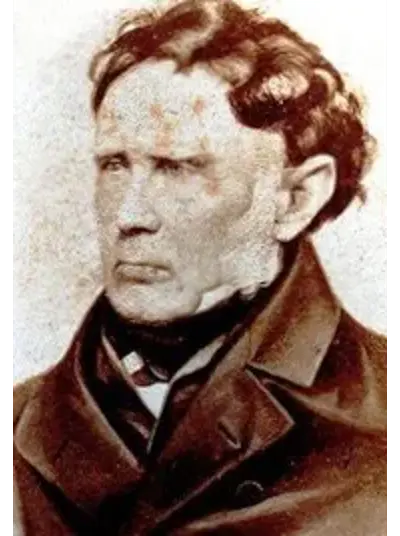
Sir Andries Stockenström, 1st Baronet, was lieutenant governor of British Kaffraria from 13 September 1836 to 9 August 1838.
