Richard Nixon Quotes
Law enforcement officers should use only the minimum force necessary in dealing with disorders when they arise. A human life-the life of a student, soldier, or police officer-is a precious thing, and the taking of a life can be justified only as a necessary and last resort.


5 New York City—Staten Island--police officers were arresting a large unarmed Black man, and one of them used a “choke hold” which was against Departmental Regulations. The man cried out several times that he was having trouble breathing and he was choking, until he was choked to death. The coroner ruled that a crime had been committed and the death was a homicide. However, the Staten Island District Attorney and his Grand Jury refused to even indict the officer that did the choking. Staten Island was a very conservative, white enclave in New York City. See {642459}.


The United States has agreed to this treaty. The principle is part of the law in most states except Florida and a few other jurisdictions which have adopted “stand your ground” legislation.

This proclamation was obviously unconstitutional, but at the time no one challenged it in the courts. It is yet another example, where in an emergency, executive officers of government tend to over-reach and expand their power and authority using the necessity of the emergency as the justification. This case was particularly ironic in that the mayor, so concerned with law and order that he would summarily kill people suspected of looting, was indicted and convicted for corruption the following year. His jail time was limited by a successful court appeal, and he then lost as a mayoralty candidate, but did finally get elected to the San Francisco City Council. Of course, had he been shot when first suspected of his crime—as he proscribed for others--he would never have had the opportunity to appeal and be acquitted.


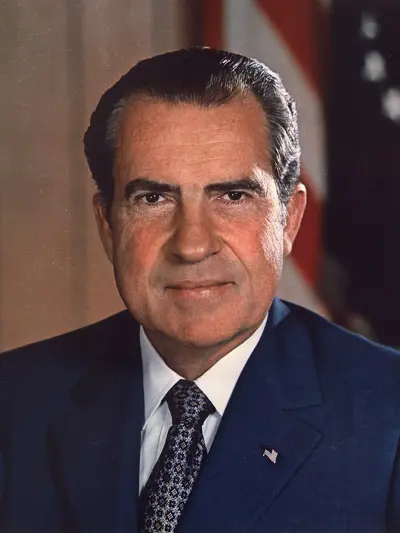
Richard Milhous Nixon was the 37th president of the United States, serving from 1969 to 1974. A member of the Republican Party, Nixon previously served as the 36th vice president from 1953 to 1961, having risen to national prominence as a representative and senator from California. After five years in the White House that saw the conclusion to the U.S. involvement in the Vietnam War, détente with the Soviet Union and China, and the establishment of the Environmental Protection Agency, he became the only president to resign from the office, following the Watergate scandal.
