Byron White Quotes
It is not better that all felony suspects die than that they escape. Where the suspect poses no immediate threat to the officer and no threat to others, the harm resulting from failing to apprehend him does not justify the use of deadly force to do so. It is no doubt unfortunate when a suspect who is in sight escapes, but the fact that the police arrive a little late or are a little slower afoot does not always justify killing the suspect.
United States, Supreme Court. Tennessee v. Garner. 471 U.S. 1. United States Government Printing Office, 1985, p. 11.


This statement by the police commissioner was very controversial as a major form of police brutality at the time was clubbing citizens with their nightsticks which were much larger and heavier than those used today. However the effect on the police officers was to green light heavy use of the nightstick and soon there was a major incident where the police badly beat many innocent citizens in their quest to control and punish alleged leftists. Whalen was forced to resign. See {626664} and {626663}.


5 New York City—Staten Island--police officers were arresting a large unarmed Black man, and one of them used a “choke hold” which was against Departmental Regulations. The man cried out several times that he was having trouble breathing and he was choking, until he was choked to death. The coroner ruled that a crime had been committed and the death was a homicide. However, the Staten Island District Attorney and his Grand Jury refused to even indict the officer that did the choking. Staten Island was a very conservative, white enclave in New York City. See {642459}.

In many cases of police brutality, the police arrest the victim and the prosecutor agrees to drop the criminal charges if the victim agrees not to file a police brutality complaint. In Rangel’s youth there were no police review boards and if police beat young men, they were usually able to get away with it, unless the victims happened to be from rich, powerful families. In modern times, the police still get away with brutality but more and more are caught and prosecuted. However, the less police brutality is in large part due to the increased professionalism among police officers brought about by higher qualifications and much better training.

This proclamation was obviously unconstitutional, but at the time no one challenged it in the courts. It is yet another example, where in an emergency, executive officers of government tend to over-reach and expand their power and authority using the necessity of the emergency as the justification. This case was particularly ironic in that the mayor, so concerned with law and order that he would summarily kill people suspected of looting, was indicted and convicted for corruption the following year. His jail time was limited by a successful court appeal, and he then lost as a mayoralty candidate, but did finally get elected to the San Francisco City Council. Of course, had he been shot when first suspected of his crime—as he proscribed for others--he would never have had the opportunity to appeal and be acquitted.


At the time, Wallace and many other Southern politicians were leading efforts to undermine the new Civil Rights Laws ending legal segregation. Most Southern police forces had been major vehicles for enforcing segregation and brutally suppressing any protests or demonstrations against segregation. Law enforcement officers had been active in lynchings and murders.


The United States has agreed to this treaty. The principle is part of the law in most states except Florida and a few other jurisdictions which have adopted “stand your ground” legislation.

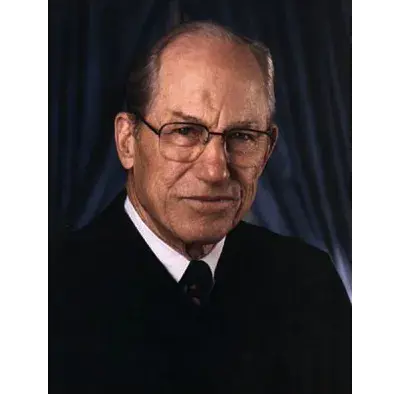
Byron Raymond "Whizzer" White was an American lawyer and professional football player who served as an Associate Justice of the Supreme Court of the United States from 1962 to 1993. Born and raised in Colorado, he played college football, basketball, and baseball for the University of Colorado, finishing as the runner up for the Heisman Trophy in 1937. He was selected in the first round of the 1938 NFL Draft by the Pittsburgh Pirates and led the National Football League in rushing yards in his rookie season. White was admitted to Yale Law School in 1939 and played for the Detroit Lions in the 1940 and 1941 seasons while still attending law school. During World War II, he served as an intelligence officer with the United States Navy in the Pacific Theatre. After the war, he graduated from Yale and clerked for Chief Justice Fred M. Vinson.
