Murray Rothbard Quotes
Lacking the direct test of success or failure, the voter tends to turn, not to those politicians whose measures have the best chance of success, but to those with the ability to 'sell' their propaganda. Without grasping logical chains of deduction, the average voter will never be able to discover the error that the ruler makes.
Rothbard, Murray N. Man, Economy, and State. D. Van Nostrand, 1962, p. 886.


In 2012, the Republicans were a very narrow party; almost all Republicans were quite conservative. In contrast, the Democrats had conservatives, liberals and socialists at the same time. When the Democrats accomplished something, if they talked much about it, the conflicts within the party would be ripped open and there would be democrats attacking the democratic accomplishments along with the Republicans. Historically, it was not always such. In the 1940s for example, it was the reverse where the Republicans were generally more quiet about their accomplishments than the Democrats who were divided only on race relations and civil rights and unified on most else.

The Democrat campaign operators, led by Robert Woolley, for the first time in an American Presidential campaign, used all the new techniques of public relations and advertising that had been developed. Many observers like the New Republic editors saw this in a negative light for American democracy. They wanted the old method where people met the candidates and had discussions with candidates or heard from others who had. It was in retrospect an editorial of nostalgia, as the country was growing so much that voter “acquaintance” with Presidential candidates was becoming more and more difficult.


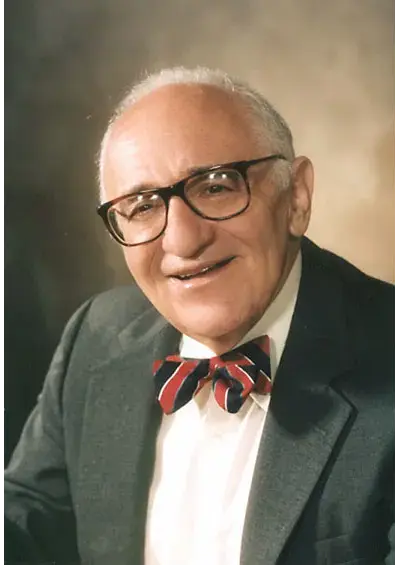
Murray Newton Rothbard was an American heterodox economist of the Austrian School, economic historian and political theorist. Rothbard was the founder and leading theoretician of anarcho-capitalism, a staunch advocate of historical revisionism and a central figure in the 20th-century American libertarian movement. He wrote over twenty books on political theory, revisionist history, economics, and other subjects.
