Seneca the Younger Quotes
Kindly remember that he whom you call your slave sprang from the same stock, is smiled upon by the same skies, and on equal terms with yourself breathes, lives and dies. It is just as possible for you to see in him a free-born man as for him to see in you a slave.
This quotation illustrates a huge difference between Roman Slavery (as well as slavery in many other societies) on the one hand and American Slavery which was much more pernicious. In Rome, slave and master status was a function of circumstances—events and luck. The slave was inherently no less able than the master. Indeed, if a battle might have gone the other way, their roles could be reversed. There was huge inequality of rights and privileges, between slaves and masters, but inherently they were both humans. Often slaves as a result of life before capture were very educated—far more so than their masters. Some were leaders, some poets. In American Slavery there was an overlay of inherent inferiority which most Southerners believed, and worst of all, the perpetuation of that notion tended to be believed by most American slaves. The American slave never had the human dignity that a Roman slave did.
Lucius Annaeus Seneca (the Younger), 4 BC-65 AD., Roman Statesman, Dramatist & Philosopher, Letter XLVII: On master and slave
Sourced by: Eigen's Political and Historical Quotations


This quotation many think is the greatest statement of political equality ever written. Interestingly is also lays an obligation on all people for all others. It was written by a privileged nobleman, a Baron, who was instrumental philosophically and politically in establishing the Batavia Republic in Holland.


Ernestine Louise Polowsky. Rose was an atheist as well, a rarity for abolitionists of the time.


Jefferson’s original was: We hold these truths to be sacred and undeniable that all …

This wording was used a few years later by the French in their Revolution,


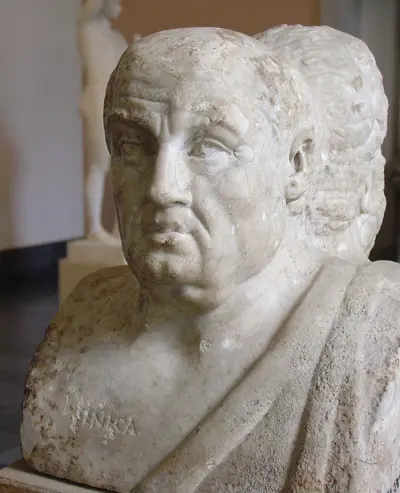
Lucius Annaeus Seneca the Younger (/ˈsɛnɪkə/; c. 4 BC – AD 65), usually known as Seneca, was a Roman Stoic philosopher, statesman, dramatist, and in one work, satirist from the Silver Age of Latin literature.
