John Kerry Quotes
Just the fact that we can't pass budgets in our Congress, just the fact that we are gridlocked in our own democracy, the fact that everybody who travels can see that we're not investing in our airports, in our rail, in our infrastructure and so forth, people are noticing a United States that is not getting the job done in some ways.
Kerry, John. Remarks at a press conference, 2013.


At the time, roads were built by the states. This was one of the first instances urging that the Federal Government take some responsibility for roads. This would culminate when President Eisenhower proposed and created the National Highway System and as Madison predicted, it would have a massive economic benefit for the nation.

This was one of the worst Congresses in American History and had the worst productivity record—passing very few bills, and none of any significance. The anti-government, Tea Party hyper-conservative Wing of the Republican Party intimidated the Speaker of the House and they were opposed to any compromise at all on anything.
Although Madison vetoed the Federal bill to improve the national infrastructure, he was very much for the improvements and he said so in this veto message. He, however, did not see the Constitutional authority for the Federal government to appropriate moneys to be spent in the States for infrastructure improvement. He was for a Constitutional Amendment to do so or to make the improvements using State money as New York did building the Erie Canal. Alexander Hamilton, and many of the Congressmen who voted for the bill disagreed (many of whom were also in the Constitutional Convention) and did not see the Constitutional limitation that Madison did. See Hamilton’s Quote 644278. He was particularly concerned that small and less affluent states could not possibly have the skill to design these or the finances to build them. Later President’s and Congresses sided with Hamilton. It would be hard to envision America today of Madison’s view had prevailed.


MacNab was also a director of the Great Western Railway.


These three principles not only were the philosophical and political lynchpins of the Chinese Republican efforts but were incorporated into the first line of the national anthem of the Republic of China which became the government of Taiwan when the Chinese Communists won the mainland and the rest of China. The nationalists only delivered one of the three: Nationalism and that with much corruption. The Communists delivered two with less corruption and thus won China.

This was one of the most remarkable statements made by a Congressional leader. At the time, the Congress was in the midst of one of the worst stalemates in American Political History. The national debt limit had to be raised in order to legally pay for the expenses that the Congress had voted for and the President had approved. A minority of the House—the Tea Party--tried to use the necessary legislation to get a program of theirs legislated when they did not have the votes to pass it in both houses of Congress. The House would not approve any solution that the Senate would pass, and the Senate would not pass any of the House proposals. The Boenner and the President had reached a compromise but the minority of his own party refused to go along and threatened to oust the Speaker and not vote for the Compromise. To them, compromise was surrender and doing business as usual. At the same time, the left wing of the President’s party did not want to vote for the Compromise plan that the President and the Speaker had worked out. Then the Minority Leader of the Senate, create a new plan that would transcend solve the immediate problem and defer the larger issues which would continue to be debated. The Senate Majority Leader agreed to go along with it and so did the President, but the Minority Leader’s fellow Republicans in the House refused to vote for that compromise. The President and then Boenner went on national television sequentially to explain the situation and the Speaker made this famous quotation, Boenner, we caught in an impossible situation. His Tea Party faction insisted that there need not be a stalemate. The President and the Senate needed the debt limit raised and they would have to give in and vote for the Tea Party plan. Almost all of the Tea Party members were new to Congress and Bonner realized that an entire party who controlled the Senate would never be blackmailed that way, and even if they did, the President would Veto. Yet his own deputy was preferred by the Tea Party and some others, so if Boenner tried to act statesman like, he was risking his speakership. So he became the spokesperson of the Tea Party wing and denied what 90 percent of all Americans knew to be true. Usually absurd statements clearly contrary to the facts at the time are the results of mistakes or gaffs. Occasionally, a more complex situation explains it.


The objective of a large proportion of the Congress then was not to improve the nation or even pass legislation, but to preserve their ideology and attack and weaken the other party. Compromise for example is probably the best legislative practice, but that Congress had a substantial number of Tea Party and other ultra conservatives who believed that any compromise at all was an immoral abandonment of principle.


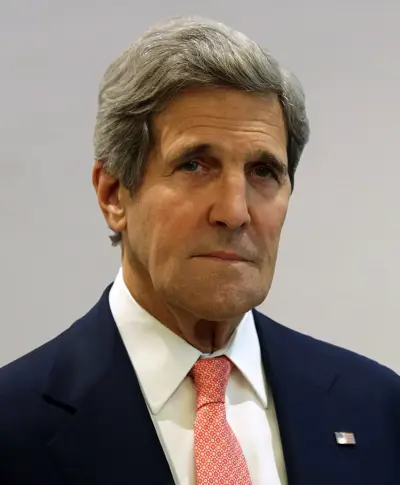
John Forbes Kerry is an American politician and diplomat serving as the United States Special Presidential Envoy for Climate. He previously served as the 68th United States Secretary of State from 2013 to 2017. An attorney and former naval officer, Kerry first drew public attention as a decorated Vietnam veteran turned anti-war activist. He went on to serve as a prosecutor and as Lieutenant Governor of Massachusetts, before serving as United States Senator from Massachusetts from 1985 to 2013. A member of the Democratic Party, he was the Democratic nominee for President of the United States in the 2004 election, which he lost to incumbent President George W. Bush. He is the last Democratic presidential candidate to date to lose the popular vote.
