Kapil Sibal Quotes
Judges decide upon copyright law. They decide upon trademark law. They decide upon scientific issues. They decide upon very complex technical issues on a daily basis. So you must have confidence in the Supreme Court, that they will apply their mind and they will come out with a decision consistent with the Constitution.
Sibal, Kapil. Speech in Rajya Sabha. Rajya Sabha TV, 14 May 2012.


The New Deal liberal Democrats had complained that the Supreme Court was making national policy and law and not interpreting law. They tried to pack the Supreme Court by adding more justices who would be more sympathetic to the New Deal. (See {587549}.) At the beginning of the 21st century it was the conservative Republicans who were making the same claim that the Supreme Court was making law and not interpreting it. The pattern seems to be when the court votes for your side, they are interpreting the law. When they vote for the other side, they are activist—making law improperly.


Referring to the Brown v. Board of Education, the Topeka, KS, Supreme Court school desegregation decision:

Cummings was arguing against a Constitutional amendment. His alternative led to Roosevelt's court packing schema.


There are some Americans who believe that the courts should look to the original intent of the framers of the Constitution to determine the constitutionality of a law. Most jurists believe that original intent is but one factor that should influence the decision.

This quotation is particularly important because it summarizes one of two opposite schools or thought regarding judicial interpretation of the Constitution that politicians have been arguing about since the Supreme Court first sat. The other is Original Intent where only the original intentions of the writers and ratifiers of the Constitution should be considered—assuming that it can be determined.


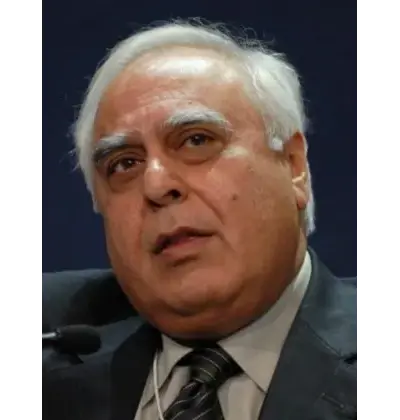
Kapil Sibal is an Indian politician belonging to the Indian National Congress party. A lawyer, he formerly served at the helm of various ministries in the Congress-led UPA government over the years – beginning with the Ministry of Science & Technology, then the Ministry of Human Resource Development followed by the Ministry of Communications & IT, and the Ministry of Law & Justice.
