John Stuart Mill Quotes
Jews, instead of being stationary like other Asiatics, were, next to the Greeks, the most progressive people of antiquity, and, jointly with them, have been the starting-point and main propelling agency of modern cultivation.
John Stuart Mill, 1806-1873, Member of Parliament, British Political Economist, Representative Government, 1861
Sourced by: Eigen's Political and Historical Quotations

Samuel Langhorne Clemens, 1835-1910

Miller was the first Black American admitted to a Graduate Program—Johns Hopkins—in Mathematics


There was a German anti-Semitic movement then to expel the Old Testament and everything that related to the Jewish People out of Christianity. In the early days of irrational anti-Semitism and Nazism he was one of the few who preached against the hateful Nazi propaganda. – See {638919}. However, when it became clear that the Nazis had the upper hand, he publicly recognized the Nazi government as legitimate, required Catholic clergy to remain loyal to the Nazi government, and maintained bridges between fascism and the Church He then became intimidated and became silent on the terrible inhuman, un-Christian treatment of the Jews concentrating his efforts on negotiating the best for the Catholics that he could get. See {639129}.


1st Earl of Beaconsfield


Within 5 years, the process began as Shermer had predicted. Several states had legalized gay marriage, and Christian groups were on both sides of the controversy when in earlier years, there were very few Christian defenders of gay rights.

Ataturk, trying to modernize Turkey was attempting it in a single generation and to a great extent succeeded.
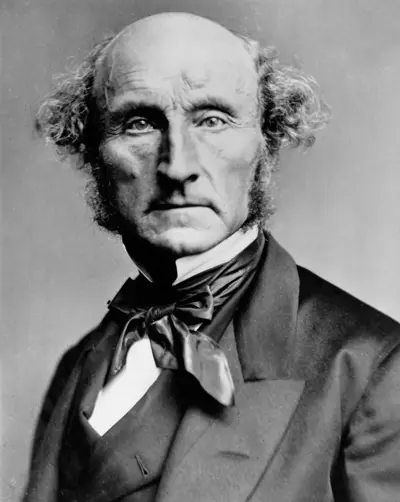
John Stuart Mill, usually cited as J. S. Mill, was an English philosopher, political economist, Member of Parliament, and civil servant. One of the most influential thinkers in the history of classical liberalism, he contributed widely to social theory, political theory, and political economy. Dubbed "the most influential English-speaking philosopher of the nineteenth century", he conceived of liberty as justifying the freedom of the individual in opposition to unlimited state and social control.
