Saionji Kimmochi Quotes
Japan has no intention of ever attempting to dictate to another country how it should regulate its internal affairs, but our normal human pride would always be irritated by specific legal discrimination against us as Japanese
The United States and some other nations had laws that specifically discriminated against Japanese in immigration and other aspects of society.
Kimmochi Saionji, 1849-1940, Prime Minister of Japan & President of the House of Peers, Quoted in J. O. P. Bland, China, Japan and Korea, 1921
Sourced by: Eigen's Political and Historical Quotations


1st Viscount Shibusawa. Not only was there gross discrimination—mostly in the Western States—against the Japanese, but they were subjected to physical harassment and violence.


Kissinger and Nixon had just had a meeting with Golda Meir, the Israeli Prime Minister who had asked them to support the right of Russian Jews to emigrate to Israel. Kissinger himself was Jewish and Nixon’s closest confidant about world affairs. It is not clear whether or not this was another example of Kissinger pandering to Nixon’s prejudices which he did often. See {621138} for Nixon’s reply. This quotation was uncovered in 2010 when more of the Nixon White House tapes were released.


The United States has often staffed its foreign mission with foreigners to save money or obtain specific skills.


Most immigration reformers want to open immigration more widely. Ward wanted immigration restricted to certain ethnicities and limited. Essentially, this was code for anti-Catholicism and anti-Semitism. The immigrants that he described as not being “helpful” have made some of the greatest contributions to America. One element of the immigration debate that is illustrated by this quotation is whether the United State should be homogeneous or heterogeneous. It has been the latter and that has brought the best of cultures of the world to the United States which has constantly been shaped by its immigrants even as it shaped and assimilated the immigrants.


She had read reports that Chinese faced in several lands of the West. The worst of these were Peru and Cuba where Chinese emigrant labor were kidnapped and worked in slave conditions. Prior to Cixi, Chinese Emperors had little or no concern for the laborers and peasants in their own country much less those Chinese who had gone abroad in search of a better life.
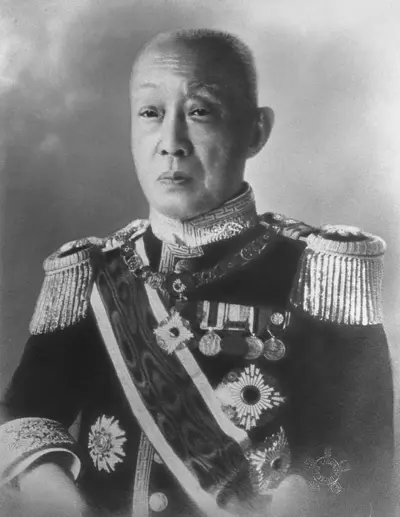
Prince Saionji Kinmochi was a Japanese politician, statesman and twice Prime Minister of Japan. He was elevated from marquis to prince in 1920. As the last surviving member of Japan's genrō, he was the most influential voice in Japanese politics from the mid-1920s to the early 1930s.
