Peter G. Peterson Quotes
I've known Alan Simpson and Erskine Bowles and they're two of the most independent people I've ever known in my life, and the thought we could somehow bend their views I find really beyond my capacity to believe.
Peterson, Peter G. Interview by Jackie Calmes. "A Billionaire's Foundation Helps Push Deficit Issues." The New York Times, 9 Oct. 2012.


The Clinton budget was a very unusual one. He and Treasury Sectary Robert Rubin determined that the large deficit built up in the previous administrations and the high interest rate were competing with the private sector for investment capital. Therefore the budget raised taxes and took other steps to reduce the largest deficit then in American History. Virtually all of the Republicans saw disaster for the economy with this budget and even some of the fiscal conservatives from Clinton’s own party were opposed. The budget passed by a single vote in the House, and that started the largest economic growth period in American History. The economy became so strong that Clinton was able to produce a balanced budget, eliminate the Reagan deficit and produce more new jobs than any administration in American history. The prediction that the budget would cause the country to fail was, not only wrong, but the budget caused the nation to succeed, beyond what any thought possible. See {626772} for one of the warnings from his own party.


After many years of deficit financing, Clinton finally produced a balanced budget and together with his Secretary, of the Treasury, Robert Rubin, actually developed an economy which was producing a huge annual surplus that would soon eliminate the national debt. However, when George W. Bush replaced Clinton after two terms, Bush was unable to manage the budget any better than the other aspects of the Presidency. He cut taxes dramatically and even after it was clear that the Clinton surplus was squandered, he continued tax reductions and even increased them while increasing government spending creating the biggest government in history and went from our largest surplus to our largest deficit in his 8 years.


He and Bowles were the two leaders of the Presidential National Commission on Fiscal Responsibility and Reform. The commission recommendations to put the nation on a sound financial footing involved sacrifice by almost every sector of American society—everyone would have to give up something that they valued. So the initial reaction of almost every interest group was to oppose the plan. Over time however, there was a realization that unless the burden would be borne by some and not by others, the plan was reasonably fair. It illustrates the initial reaction of Americans to reform proposals is to retain all the benefits that they have and have others give up their benefits.


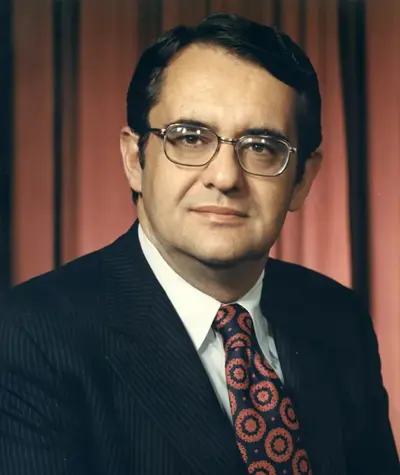
Peter George Peterson was an American investment banker who served as United States Secretary of Commerce from February 29, 1972, to February 1, 1973, under the Richard Nixon administration. Before serving as Secretary of Commerce, Peterson was also chairman and CEO of Bell & Howell from 1963 to 1971. From 1973 to 1984 he was chairman and CEO of Lehman Brothers. Later in 1985, he co-founded the private equity firm The Blackstone Group, and served as chairman. In the same year, Peterson became chairman of the Council on Foreign Relations, a position he held until his retirement in 2007 after which he was named chairman emeritus. In 2008, Peterson was ranked 149th on the "Forbes 400 Richest Americans" with a net worth of $2.8 billion. He was also known as founder and principal funder of The Peter G. Peterson Foundation, which is dedicated to promoting fiscal austerity.
