John C. Calhoun Quotes
It is admitted on all sides that we must equalize the revenue and expenditures. The scheme of borrowing to make up an increasing deficit must, in the end, if continued, prove ruinous.
Calhoun, John C. The Works of John C. Calhoun. Edited by Richard K. Crallé, vol. 4, D. Appleton and Company, 1854.


The Clinton budget was a very unusual one. He and Treasury Sectary Robert Rubin determined that the large deficit built up in the previous administrations and the high interest rate were competing with the private sector for investment capital. Therefore the budget raised taxes and took other steps to reduce the largest deficit then in American History. Virtually all of the Republicans saw disaster for the economy with this budget and even some of the fiscal conservatives from Clinton’s own party were opposed. The budget passed by a single vote in the House, and that started the largest economic growth period in American History. The economy became so strong that Clinton was able to produce a balanced budget, eliminate the Reagan deficit and produce more new jobs than any administration in American history. The prediction that the budget would cause the country to fail was, not only wrong, but the budget caused the nation to succeed, beyond what any thought possible. See {626772} for one of the warnings from his own party.


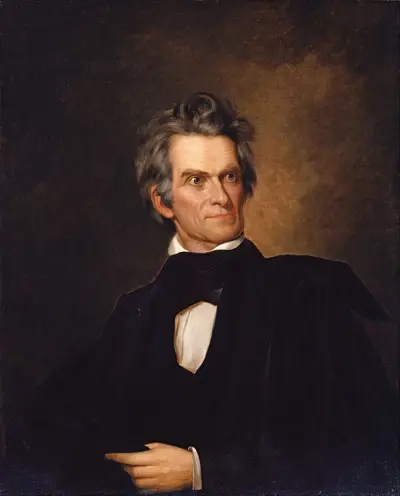
John Caldwell Calhoun was an American politician and political theorist from South Carolina who held many important positions including being the seventh vice president of the United States from 1825 to 1832, while adamantly defending slavery and protecting the interests of the white South when its residents were outnumbered by Northerners. He began his political career as a nationalist, modernizer, and proponent of a strong national government and protective tariffs. In the late 1820s, his views changed radically, and he became a leading proponent of states' rights, limited government, nullification, and opposition to high tariffs. He saw Northern acceptance of those policies as a condition of the South remaining in the Union. His beliefs and warnings heavily influenced the South's secession from the Union in 1860–1861.
