Ron Paul Quotes
It’s time to rethink the whole system of HMOs and managed care. This entire unnecessary level of corporatism rakes off profits and worsens the quality of care.
Although extremely conservative, Paul was opposed to giving corporations a cut of economic activity just to say that it was private and not public of government run. The corporate HMOs and managed care organizations claimed that they are performing a quality control and money saving service, but there were non profit organizations that performed the functions just as well and did not add on a profit fee for themselves,
Ronald E. Paul, U.S. Congressman (Republican, TX), Libertarian Nominee for President, Diagnosing our Health Care Woes, September 25, 2006
Sourced by: Eigen's Political and Historical Quotations


Before Obamacare was passed, insurance companies could unilaterally decide who gets health insurance and who does not. Even after they allowed a person to have health insurance, they could then cancel it in many cases after someone got sick. So they determined who could or could not get health insurance,


At the time, over 40 million Americans were without health insurance, and the cost of health care was increasing at several times the rate of the economy as a whole. America had the best medicine in the world but did not yet have a way to deliver it to all citizens.


At the time in America, the insurance companies only paid out less than 80 percent of all the money they took in for health insurance. More than 20 percent went into their high overhead and profits. In contrast, to the 20 percent or more that it costs with insurance companies to administer health insurance payments, the agency that performs the same function for Medicare doe so with only a 6 percent cost Sanders argued that by getting rid of the insurance companies, the nation could save about 14 percent of the entire insured medical bills for the nation—many billions of dollars which would reduce average health insurance premiums by 14 percent. Opponents argue that the would be a socialist system and give too much potential control of individual health matters to a government operated or government controlled organizations. Politicians, in order to look good with the voters, would lower premiums and also pay out less either shortchanging doctors and hospitals or rating medial care somehow.
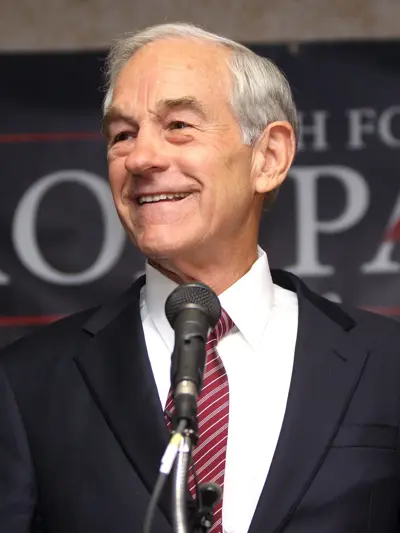
Ronald Ernest Paul is an American author, physician, and retired politician who served as the U.S. Representative for Texas's 22nd congressional district from 1976 to 1977 and again from 1979 to 1985, and for Texas's 14th congressional district from 1997 to 2013. On three occasions, he sought the presidency of the United States: as the Libertarian Party nominee in 1988 and as a candidate for the Republican Party in 2008 and 2012. A self-described constitutionalist, Paul is a critic of the federal government's fiscal policies, especially the existence of the Federal Reserve and the tax policy, as well as the military–industrial complex, the war on drugs, and the war on terror. He has also been a vocal critic of mass surveillance policies such as the USA PATRIOT Act and the NSA surveillance programs. He was the first chairman of the conservative PAC Citizens for a Sound Economy, a free-market group focused on limited government, and has been characterized as the "intellectual godfather" of the Tea Party movement, a fiscally conservative political movement that is largely against most matters of interventionism.
