Bernie Sanders Quotes
We should get the insurance companies out of the health care system.
At the time in America, the insurance companies only paid out less than 80 percent of all the money they took in for health insurance. More than 20 percent went into their high overhead and profits. In contrast, to the 20 percent or more that it costs with insurance companies to administer health insurance payments, the agency that performs the same function for Medicare doe so with only a 6 percent cost Sanders argued that by getting rid of the insurance companies, the nation could save about 14 percent of the entire insured medical bills for the nation—many billions of dollars which would reduce average health insurance premiums by 14 percent. Opponents argue that the would be a socialist system and give too much potential control of individual health matters to a government operated or government controlled organizations. Politicians, in order to look good with the voters, would lower premiums and also pay out less either shortchanging doctors and hospitals or rating medial care somehow.
Bernie Sanders Interview, The Tavis Smiley Show November 15, 2016
Sourced by: Eigen's Political and Historical Quotations


This quotation is interesting for two reasons: First, President Donald Trump had campagned on teh promise of Universal Health Insurance and in the early days of the Tramp Administration, Trump's Manager of the Office of Management and Budget effectivly repudiated Trum's campaign promise. Second, it ilustrates the narrownss to the thinking of soem of the very conservative politicians of the era. Virtually every industiral democracy in the world had universial health or health insurance coverage. Mulvaney's thinking was limited to teh classic U. S. model of health insurance premiums being paid by individuals and companies to privat insurance companies. Yet most other countries had teh government coelect the money and pay the health providers (the single payer system) of simply funded universal ehalth care through the general tax revenues, and had no specific act of buying a policy so there was no way for people to refuse.


The Republicans were trying to repeal the first national health reform since Medicare. But the part was split over what they would replace it with. Many wanted to give the health insurers more power and profits, but other Republicans like Cruz did not want to see the helath insurance premiums increase. Ironically, most members of Congress at the time agreed with Cruz's focus on lowering or at least holding health insurance premiums steady, but this was vert hard to do without heavily regulating the insurance companies or adding a public insurance program to compete with the insurance companies or eliminate the rights of the individual states to regualte and control; insurance in their state. And no majority could be found for any of these.

Unlike most forms of insurance virtually everyone will have one or more claims and collect in his or her lifetime. Many of use will never have an automobile crash and collect on our insurance policy, but health is different in that we all change health status from well to ill at times and if we are fortunate we return to a state of wellness. But as Eigen observes, most of us who are tell are only temporarily well, With time our state will change to ill and if we are not very fortunate we will never use our health insurance as we will be dead. There is almost no way to age in a modern society without needing health care or funeral services, That is the consequence of the normal process of aging. So with health insurance schemes we, in effect, pass money from the living well to the living ill. So if health care costs increase fastr than inflation, which it has almost always done in the last half century, the temporarily well will be paying more and more. The only way to break that cycle is to somehow limit the cost increases of health care to that of the inflationary increase. Eigen has argued that most of us focus on the wrong problem--the details of the way the well pay for the ill, when the only soltuion is to reduce the rate of increases of health care costs. And there are only 2 ways to do that: Reduce the compensation for all the health care actors--physicians, nurses, other staff, hospitals, and manufacturers of medical equipment, supplies and expecially pharmaceuticals which have been increasing at the fastest rate of all or wer privide more and more effective prevention.


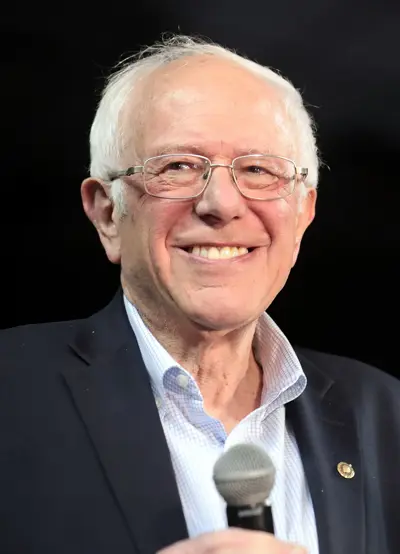
Bernard Sanders is an American politician who has served as the junior United States senator from Vermont since 2007 and as U.S. Representative for the state's at-large congressional district from 1991 to 2007. He is the longest-serving independent in U.S. congressional history, although he has a close relationship with the Democratic Party, having caucused with House and Senate Democrats for most of his congressional career. Sanders unsuccessfully sought the Democratic Party nomination for president of the United States in 2016 and 2020, finishing in second place in both campaigns. Before his election to Congress, he was mayor of Burlington, Vermont.
