Debbie Stabenow Quotes
I think that we have a number of different health care challenges in our country, and certainly addressing the uninsured is one, and the second is making sure that those with health insurance actually get the care that they assume they'll have available to them if they get sick.
Stabenow, Debbie. "Health Care Reform Debate." Congressional Record, 111th Cong., 1st sess., U.S. Government Printing Office, 8 Dec. 2009.


That particular Libertarian platform called for the abolition / repeal of Social Security, Medicare, Medicaid, the Post Office, Federal election Commission and campaign finance laws. Extreme radical ideas such as this are not typical of Libertarian Party positions before or afterwards. The quotation illustrates that there are people in America who would end public education if they could. The quotation also illustrates how a small cadre of people can capture control of a political party and create a platform that is their own personal views which may be different from most of the party members or the historical position that the party has taken. In 1980 the Libertarian Party Vice Presidential Candidate was David Koch, one half of the billionaire conservative Koch brothers. Their money financed the Libertarian Party in that year and David Koch’s views then prevailed in the party platform. Historically, the Koch brothers moved from a minor third party to the Republican party at the beginning of the 21st century when their money was able to help drive the party very far to the right from the traditions of Abraham Lincoln and Theodore Roosevelt.


Although extremely conservative, Paul was opposed to giving corporations a cut of economic activity just to say that it was private and not public of government run. The corporate HMOs and managed care organizations claimed that they are performing a quality control and money saving service, but there were non profit organizations that performed the functions just as well and did not add on a profit fee for themselves,


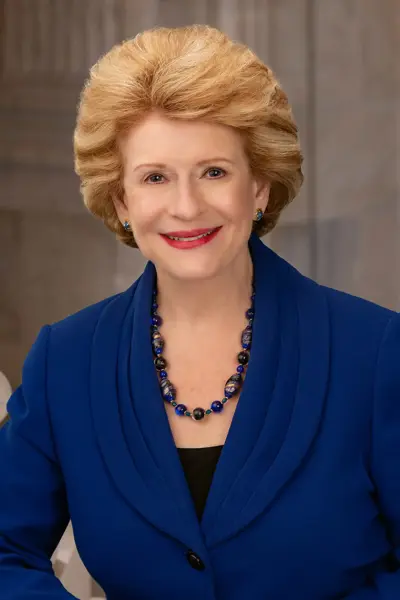
Deborah Ann Stabenow is an American politician serving as the senior United States Senator from Michigan, a seat she was first elected to in 2000. A member of the Democratic Party, she became the state's first female U.S. senator after defeating Republican incumbent Spencer Abraham. Before her election to the Senate, she was a member of the U.S. House of Representatives, representing Michigan's 8th congressional district from 1997 to 2001. Previously she served on the Ingham County Board of Commissioners and in the Michigan State Legislature.
