Cory Booker Quotes
It's not hard to imagine Donald Trump leading us into a war just because somebody got under his very thin skin.
Booker, Cory. Remarks at a Hillary for America Rally. 2016. Speech.


At the time of this speech virtually the entire world believed that. However world attitude changed markedly after the administration of George W. Bush and the United States invasion of Afghanistan after September 11 and the Iraq War which was for regime change.


1st Earl Baldwin of Bewdley. Though members of the same Conservative Party, Churchill was a major opponent of Baldwin’s peace and “appeasement” efforts and publicly castigated Prime Minister Baldwin. Yet Baldwin, if he could not stave off war, wanted his critic to serve as Prime Minister if war was inevitable. Churchill never had much respect for Baldwin. See {626930}.

Actually, the two world wars were wars of necessity. The Korean War and the Vietnam war are considered by many as wars of choice. But most of our military incursions—the Mexican War, the Spanish American War, Grenada, the Serbian War, Hati incursions and many others were wars of choice for which there were often very good reasons. However, we have to go to war when America is existentially threatened. In that sense, the Iraq War which Kerry was primarily addressing, could be interpreted either way. If it was really true thread. That is what caused most members of Congress to vote to approve the war. However, when that turned out to have been untrue, and it was suspected that the weapons of mass destruction was a deliberate ruse by some.

Although Great Britain had abolished slavery, British economic interests during the Civil War suffered because of the northern blockade of the South. Much political opinion in England was hostile to the blockade policies of the Union. Bright, a great admirer and supporter of the United Sates and the Union cause was concerned that the United States might drift into War with Great Britain. His letter to Senator Sumner was written with the understanding that it would be in shared with President Lincoln, and it was actually read at a cabinet meeting.


After the attack on Fort Sumter, the South Sent “diplomats” to negotiation with the Government. Unfortunately for all, the South really was not open to negotiations as they only had two predetermined positions they would agree to: The first was that the Government should guarantee the perpetual right of states to have slavery if they wished and that fugitive slaves would be returned by the non-slave states. The second was that the Union should recognize the Confederacy as an independent nation and have peaceful relations between the two. The first was impossible to deliver even if the Union would agree to continue slavery, there was no way that the Federal Government could enforce the return of fugitive slaves from many northern states where they were free the second they set foot in the state, and the Northern states demanded States Rights and not being forced to return Fugitive Slaves forcing the Southern States to oppose States Rights when it came to Fugitive Slaves while favoring it for slavery itself. The Federal government could not enforce the Dred Scott Decision under the pro-South Buchanan administration. And Lincoln and most of the Northern Politicians would not accept a complete dissolution of the Union. There are no other possibilities the South would accept and there was really nothing to negotiate.

This was written when the United States was not a dominant military power. At the beginning of the 20th century, the U. S. had the same size military as Argentina. It was France, German, Turkey and England who had the military superiority and it was they who tended to find excuses for war. After WWII, the U. S. was dominant and was involved with a number of wars and military incursions, often with nations that had not attacked the U.S. Korns’ principle was most dramatic when the George W. Bush administration invaded Iraq on the excuse that the Iraqis were developing weapons of mass destructions and then might attack the United States. After the successful invasion, the excuse was shown to be hollow as there were no signs of sophisticated weapons development.

14 years after this statesmanlike speech, Davis flip flopped on this principle and became a firebrand and agitator and hawk for secession and war. It was the Southern upper class that controlled the politics of the South and were the ones who would suffer the greatest economic loss if the Union had continued in the direction of refusing to return runaway slaves and other abolitionist activity. Although many Southerners volunteered to fight for the confederacy, there were not enough and Davis, who in earlier years would not war unless there was genuine demand of the people, for the Civil War, the South had to resort to conscription. The North did as well.


Instructing the navy not to act precipitously during the Cuban missile crisis:
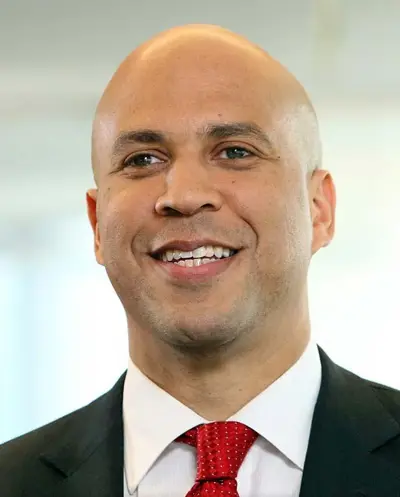
Cory Anthony Booker is an American politician, attorney, and author who has served as the junior United States Senator from New Jersey since 2013. A member of the Democratic Party, Booker is the first African-American U.S. Senator from New Jersey. He was previously the 38th Mayor of Newark from 2006 to 2013. Before that time, Booker served on the Municipal Council of Newark for the Central Ward from 1998 to 2002.
