Slobodan Milosevic Quotes
It's absurd to accuse Serbia and the Serbs for the armed secession of Croatia,.
Milošević, Slobodan. Trial Transcript. International Criminal Tribunal for the former Yugoslavia, Case No. IT-02-54-T, The Hague.

He was a brutal, sadistic war criminal who was assassinated by one of his many enemies in 2000 before he could be brought to trial. This statement was typical of his outlook and behavior. He tortured and murdered Croation and Muslim prisoners. His reference to the “slaughterhouse” was to the Second World War in which the Croats were allies of Nazi Germany and created their own concentration and extermination camps where hundreds of thousands of Serbs were murdered. In the eternal memory of the cycle of revenge in the Balkans, Arkan, tried to retaliate against the Croats who had never been called to account for their crimes and even the leadership of Croatia after the Camp David accords celebrated the Fascist times when they were dominant and were able to settle accounts with the Serbs.


Whenever different ethnicities perceive that they are in a “zero sum game” situation where one group cannot benefit without detriment to others, the situation is always unstable and usually explodes as when Yugoslavia broke apart at the end of the 20th century after being held together by a strong leader, Tito. Note that there was a different spelling of Yugoslavia in the 1920s. The pronunciation was the same.


The deep enmity between Albanian Muslims and Serbian Christians had existed for 1000 years and continued after Boletini was long gone.
The Serbs were in a conflict with the Ottoman Muslims almost 1000 years ago. However, they have never seen that war as having ended. When the Albanian Muslims were breaking from the weakened Ottoman Empire, the Serbs not only wanted to dominate Albania, but also to extract vengeance for alleged wrongs committed by Ottoman Muslims hundreds of years earlier. This attitude existed through and after the Serbian war and the Kosovo Albanian population would not live under Serbian control given the Serb war crimes and atrocities perpetrated on Muslims—not only in the historical past but even in the Serbian War. Tucovic was one of the very few Serbs who not only argued that the Serbian policy of oppression of the Muslims was not only morally wrong but counter productive from the Serbian point of view. For many Serbs, Tucovic was considered a traitor.
The Serbs were in a conflict with the Ottoman Muslims almost 1000 years ago. However, they have never seen that war as having ended. When the Albanian Muslims were breaking from the weakened Ottoman Empire, the Serbs not only wanted to dominate Albania, but also to extract vengeance for alleged wrongs committed by Ottoman Muslims hundreds of years earlier. This attitude existed through and after the Serbian war and the Kosovo Albanian population would not live under Serbian control given the Serb war crimes and atrocities perpetrated on Muslims—not only in the historical past but even in the Serbian War. Tucovic was one of the very few Serbs who not only argued that the Serbian policy of oppression of the Muslims was not only morally wrong but counter productive from the Serbian point of view. For many Serbs, Tucovic was considered a traitor.
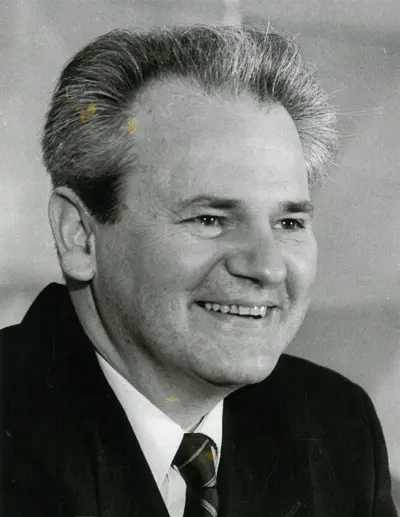
Slobodan Milošević was a Yugoslav and Serbian politician who served as the President of Serbia (originally the Socialist Republic of Serbia, a constituent republic within the Socialist Federal Republic of Yugoslavia) from 1989 to 1992 and within the Federal Republic of Yugoslavia from 1992 to 1997, and President of the Federal Republic of Yugoslavia from 1997 to 2000. He led the Socialist Party of Serbia from its foundation in 1990 and rose to power as Serbian President during efforts to reform the 1974 Constitution of Yugoslavia in response to alleged marginalization of Serbia, views that Serbia's autonomous provinces had too much power, making them almost independent from Serbia, and claims of political incapacity to deter Albanian separatist unrest in Serbia's autonomous province of Kosovo.
