Gilles Duceppe Quotes
It's a falsehood to state that francophone communities are thriving.
Canada, Parliament, House of Commons. House of Commons Debates, 39th Parliament, 1st Session, 17 Oct. 2006.


Explaining the English-only law of his Québec city:

The 1977 Quebec language law decreed that all immigrants be educated in French, that all businesses transact in French, that English-named towns, rivers, and mountains be Frenchified, and that all English (or even bilingual) commercial signs be outlawed. Other minorities could only transact business in French. After great protest and ridicule the Quebec Parliament amended the law to allow French signs to contain another language provided that the font of the other language was no bigger than half that of the French.


Kenya and a number of other countries of the world were made up of regions and tribes who spoke many languages, Kenya, India and many others chose English and most people speak their tribal or regional language and English. In some countries French was chosen. Typically, the language selected for unity was the language of the colonizers of the area.


Stalin was then only 26 years old. This was more than a decade BEFORE the Russian Revolution and Stalin was a young left wing revolutionary planning how to bring about a revolution and how the society should operate thereafter. He was then much the youthful, intellectual, Georgian idealist. The Russian upper class all spoke Russian and usually French and English as well. But the working class only spoke a single language—their native language which was for huge numbers of Russians, not Russian. It was Ukrainian, Georgian, and many others.


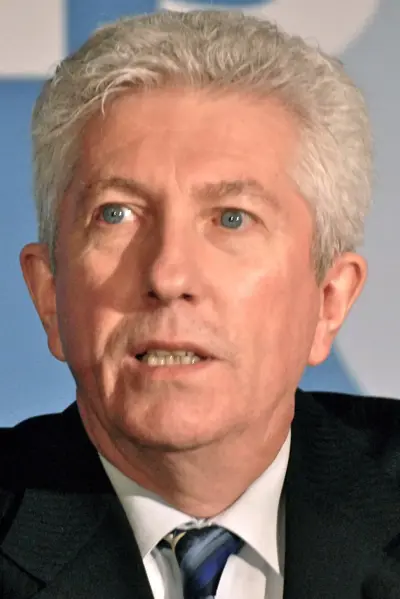
Gilles Duceppe is a Canadian politician, proponent of the Quebec sovereignty movement and former leader of the Bloc Québécois. He was a Member of Parliament in the House of Commons of Canada for over 20 years and has been the leader of the sovereigntist Bloc Québécois for 15 years in three stints: 1996, 1997-2011 and in 2015. He was Leader of the Official Opposition in the Parliament of Canada from March 17, 1997, to June 1, 1997. He resigned as party leader after the 2011 election, in which he lost his own seat to New Democratic Party (NDP) candidate Hélène Laverdière and his party suffered a heavy defeat; however, he returned four years later to lead the party into the 2015 election. After being defeated in his own riding by Laverdière again, he resigned once more.
