Ronald Graham Quotes
It would be very discouraging if somewhere down the line you could ask a computer if the Riemann hypothesis is correct and it said, 'Yes, it is true, but you won't be able to understand the proof.'
Horgan, John. The End of Science: Facing the Limits of Knowledge in the Twilight of the Scientific Age. Addison-Wesley, 1996, p. 235.


There are many systems of mathematics which are totally contrary to the world as we know and observe it; others, reflect the world as it is known. The latter we use for science. The former exist only in the mathematics world. We have mathematics today of computers that do not exist, universes that can only be imagined and some that are not even imaginable. Sometimes we realize that a mathematical system we thought had no reflection of reality, was really useful in explaining a new physical phenomenon. What is theoretical today, might need to be applied tomorrow.

3rd Earl Russell of Kingston. In mathematics the numbers can count people, autos, sins, molecules, or paintings. The mathematician does not know or care. And the mathematics is the same regardless. And the fundamentals themselves are unknown. For example, what is a number? It’s not the symbol we write; that is a numeral. Some say that it is an abstract idea that represents a quantity like 5. But what is 5? That itself is an abstraction. So few mathematicians and no layman know what they are talking about when they do mathematics. Lord Russell, with his colleague Whitehead, built up a system where they could define a number as a set with certain properties. But they take 3 large volumes full of equations in a small type font to just get to 3rd grade arithmetic and knowing what they are talking about. In politics, we also often do not know what we are talking about, but that is for a much simpler set of reasons.


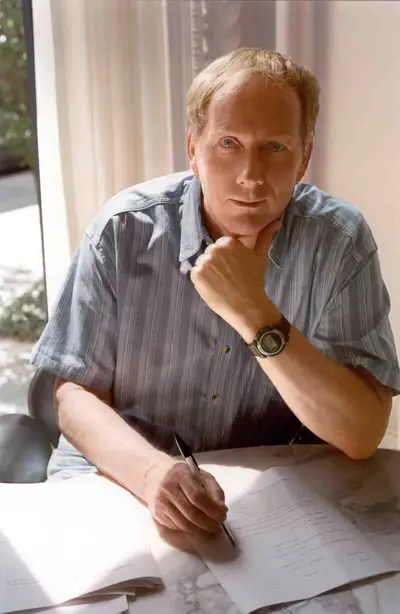
Ronald Lewis Graham was an American mathematician credited by the American Mathematical Society as "one of the principal architects of the rapid development worldwide of discrete mathematics in recent years". He was president of both the American Mathematical Society and the Mathematical Association of America, and his honors included the Leroy P. Steele Prize for lifetime achievement and election to the National Academy of Sciences.
