William Courtenay Quotes
It would be impossible adequately to describe the privations which they [the Irish poor] habitually and silently endure…. In many districts, there only food is the potato, their only beverage, water … their cabins are seldom a protection against the weather … a bed or a blanket is a rare luxury … and nearby it all, their pig and manure heap constitute their only property.
William Courtenay, 1777–1859, 10th Earl of Devon, Chairman of Irish Government Appointed “Devon Commission”, Devon Commission Report to the Irish Government, 1845
Sourced by: Eigen's Political and Historical Quotations

The Murrain was phytophthora infestans a highly contagious fungus that attacked the strain of potatoes planted in Ireland at the time. The worst thing about the blight was that the Irish poor had developed such a narrow diet that the potato was virtually their only food. See {639195} and {639196}.


Ironically, Irish farmers produced other food crops which were exported mostly to England. However the potato (which had come from South America) provided more nutrition per acre than any other crop. There was also a small fishing industry whose catch went for export as the Irish never did develop a taste for fish. There was not enough diversity from the potato.


As the son of a former president he fought in both WWI and WWII and was awarded the Congressional Medal of Honor. See {593105} for another quotation on the poverty of Puerto Rico.

So often diplomatic negotations are ongoing about “solutions” to world problems while people in crisis do not get any immediate help which is needed.


For his seditious activities he was sentenced to penal servitude for life. He escaped and came to America where he entered politics

This is exactly what happened in Scotland, and accounts for the large number of Scottish emigrants who populated many countries of the world.


The president was right. There is enough food to go around. The problem however is logistical, economic, and political. Some countries use food as a weapon to keep their own people under control. The major problem is the distribution of the food. It has to be transported from where it is gown to where it should be consumed. Much food in the third world rots because the transportation system cannot move the food efficiently enough. Even when food is donated to nations, the free or cheap food undercuts the local farmers who go out of business and there is even less food the following year.

As a practical matter, there were very few hungry children of White Republicans at the time.
In 1921, there was a terrible famine in Communist Russia. The United States was ambivalent about humanitarian relief to the leading Bolshevik county while there were Communist supporters in the U. S. who were setting off bombs and calling for the overthrow of the democratic government. Herbert Hoover persuaded President Warren G. Harding that food aid relief was a moral obligation and would do much to weaken Bolshevism. 400 ARA Americans went to Russia and hired over 120,000 Russians to implement the relief program. Rarely in human history have this few people with the resources made available to them saved as many lives as Hoover and his staff did. A number of the Americans died in Russia from disease and those who survived worked under near impossible conditions. Ironically, while it created much good will towards the United States, many including Hoover suspected that the program and the pressure that the Americans put on the Soviet Government officials for more efficient administration may have forced the Soviet Government to learn how to organize much of othe society like the railroads, thus strengthening the Communist Party’s control over the country.

The mayor decided to tackle obesity as a public health problem. Ironically, New York was already better on obesity than most parts of the United States, but it was still a major public health problems there. So the mayor went after it. He instructs his health commissioner to tell him what ideally needs to be done for the public health of the city and not to consider cost, politics, public opinion, or the vested interests of the health professionals or anyone else. Overcoming those obstacles he considers his leadership job as the mayor.


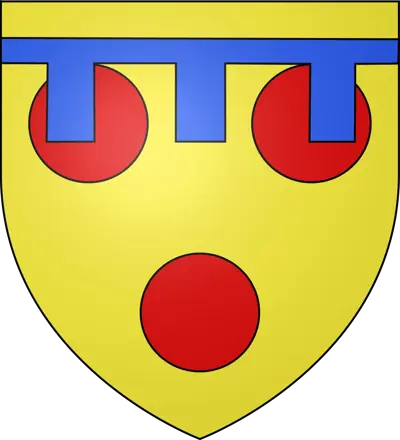
William Courtenay was Archbishop of Canterbury (1381-96), having previously been Bishop of Hereford and Bishop of London.
