John Law Quotes
If Victual should prove scarce, as we have not Goods or Money for any Value to send out for Corns [food grains like wheat]; so only a part of the People could be maintained: The better part would have Bread, but the more necessary part, the Laboring Men would be forced to leave the Country, or to starve in it.
This is exactly what happened in Scotland, and accounts for the large number of Scottish emigrants who populated many countries of the world.
John Law, 1671-1729, Scottish Economist, Money and Trade Considered: With a Proposal for Supplying the Nation with Money, 1705
Sourced by: Eigen's Political and Historical Quotations


The mal-distribution of resource problem is common in most societies.

The President was supporting birth control programs over church opposition

As the son of a former president he fought in both WWI and WWII and was awarded the Congressional Medal of Honor. See {593105} for another quotation on the poverty of Puerto Rico.


So often diplomatic negotations are ongoing about “solutions” to world problems while people in crisis do not get any immediate help which is needed.

The president was right. There is enough food to go around. The problem however is logistical, economic, and political. Some countries use food as a weapon to keep their own people under control. The major problem is the distribution of the food. It has to be transported from where it is gown to where it should be consumed. Much food in the third world rots because the transportation system cannot move the food efficiently enough. Even when food is donated to nations, the free or cheap food undercuts the local farmers who go out of business and there is even less food the following year.


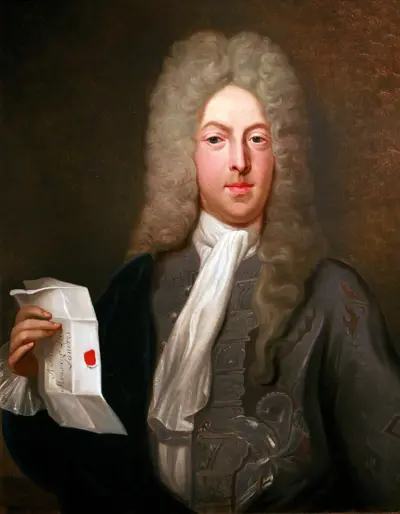
John Law was a Scottish economist who distinguished money, a means of exchange, from national wealth dependent on trade. He served as Controller General of Finances under the Duke of Orleans, who was regent for the juvenile Louis XV of France. In 1716, Law set up a private Banque Générale in France. A year later it was nationalised at his request and renamed as Banque Royale. The private bank had been funded mainly by John Law and Louis XV; three-quarters of its capital consisted of government bills and government-accepted notes, effectively making it the nation's first central bank. Backed only partially by silver, it was a fractional reserve bank. Law also set up and directed the Mississippi Company, funded by the Banque Royale. Its chaotic collapse has been compared to the 17th-century tulip mania in Holland. The Mississippi bubble coincided with the South Sea bubble in England, which allegedly took ideas from it. Law as a gambler would win card games by mentally calculating odds. He originated ideas such as the scarcity theory of value and the real bills doctrine. He held that money creation stimulated an economy, paper money was preferable to metal, and dividend-paying shares a superior form of money. The term "millionaire" was coined for beneficiaries of Law's scheme.
