George Mifflin Dallas Quotes
It will not surprise me if I turn out to by the last Minister from the United States to the British Court, and that will certainly be fame if it be not honor.
The U. S. and England were at the brink of war:
George Mifflin Dallas, 1839-1917, U. S. Minister to England, Quoted in Beckles Willson, America's Ambassadors to England, 1883
Sourced by: Eigen's Political and Historical Quotations

Because the early nation's government was still in a state of becoming, foreign powers were hesitant to do business and conclude treaties with the newly-formed United States of America:

The Prime Minister was visiting the United States and was staying at the White House. President Roosevelt had a spontaneous thought and wheeled himself into Churchill's room. The Prime Minister was stark naked, having just emerged from the bath. Roosevelt apologized but Churchill was unfazed and known for his nudity in his private quarters. He even used what might have been an awkward moment into an opportunity to make a political point.


The ambassador had received a public hearing under the assumption that the meeting would be perfunctory. Instead he used the occasion to protest the Queen's quarrels with the Spanish as it was affecting Polish merchants. Such a public complaint to a sovereign was a breach of diplomatic etiquette at the time.


The Israeli Foreign Minister conveyed to the President the suggestion of French President De Gaulle that the "Four Great Powers" ought to get together:


He had been exiled to the United States.

Germany had demanded that Belgium allow German troops to cross Belgium to the French frontier. However, King Albert was concerned that this would be a de facto German occupation of Belgium and asked for help. The British tried diplomacy but things were out of anyone’s control and the First World War ensued.

The Dutch Diplomats did not want to take sides or offend the English during the American Revolution. But the people, had little use for the English whose support they blamed for the past autocracy of William of Orange.
The “proofs” were diplomatic assurances—treaties—that England would guarantee the territorial integrity of Belgium. The British made strong diplomatic efforts to persuade Germany not to occupy Belgium. The German’s none the less send armies in under the excuse that if they did not, the French would occupy the country and have a strategic advantage over them. Diplomacy could do no more good. England had to send troops or renege on its obligations. So England was in WWI.


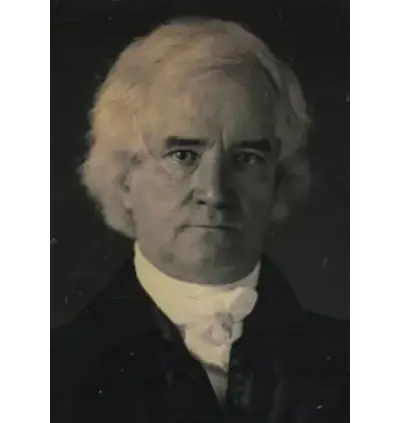
George Mifflin Dallas was an American politician and diplomat who served as mayor of Philadelphia from 1828 to 1829 and as the 11th vice president of the United States from 1845 to 1849.
