Bill Ayers Quotes
It was Frederick Douglass, John Brown, Harriet Tubman, Wendell Phillips - these were the people who made abolition real. Now, none of you guys is in favor of slavery, right?
Ayers, William. Public Enemy: Confessions of an American Dissident. Beacon Press, 2013.


These lines were quoted by W. E. B. Dubois in his The Souls of Black Folk, 1905


The issue of slavery which had been suppressed in Congress for the first decades of the nation broke out when Missouri statehood was considered. By previous agreement, slavery was not even discussed in Congress but the time period elapsed. Tallmadge not only proposed that no more slaves could come into Missouri {613176} but most shocking to the Southerners was that every person born in the new state would be free at the age of 25. In a generation, there would be no more slavery in Missouri and there would be no economic compensation for slave owners at all. The House of Representatives accepted the amendment, but it failed in the Senate. At that time, Senators were not elected by voters but were appointed by the state legislators and the Southern slave states had a disproportionate share of the senate from a population point of view. But what this quotation shows clearly that a majority of the country in 1819 were opposed to slavery and were willing to end it without compensation.


Even before we had a Constitution there was major opposition to slavery. The “price” of the American Union was the acceptance of the slavery of the South. But the hypocrisy of a country based on liberty to allow and enforce slavery was not lost on the founding fathers. Ironically the abolitionists among the founding fathers were certain that they could persuade the Southern slaveholders of the error of slavery in a few years and things would be set right in the land. Even George Washington {630626}, and Thomas Jefferson and some other slaveowners at the time wished to see its abolition. Slaveholding Southern Founding Fathers in general were so wary of the abolitionists that they achieved structural, disproportionate, power in the new Constitution to ward off the abolitionists attempts to reform slavery.

Jefferson was then the United States Minister to France. While in Paris he was offered membership by M. de Warville in the Society for the Abolition of the Slave-Trade. Jefferson felt that he had to decline because his joining would have been seen as a politically polarizing act, inappropriate for an Ambassador of the American government which was divided on the issue of slavery. Some criticize the refusal and argue that this would have been the perfect act to push the abolition perspective, and question Jefferson’s sincerity about slavery as he not only refused to join the society, but never freed his own slaves though it is argued that he never made enough money to afford to emancipate them.

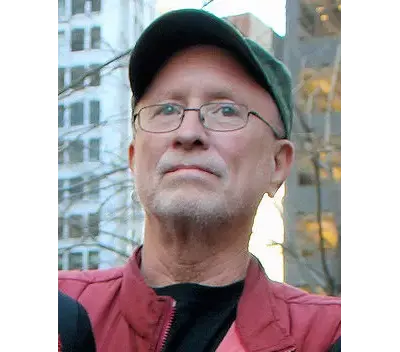
William Charles Ayers is an American elementary education theorist. During the 1960s, Ayers was a leader of the Weather Underground militant group, described by the FBI as a terrorist group, that opposed US involvement in the Vietnam War. He is known for his 1960s radical activism and his later work in education reform, curriculum and instruction.
