Paul Goodman Quotes
It takes application, a fine sense of value, and a powerful community-spirit for a people to have serious leisure, and this has not been the genius of the Americans.
Goodman, Paul. Growing Up Absurd: Problems of Youth in the Organized System. Random House, 1960.


The “Proms” have been traditional concerts in England for years. However, there are great differences in the musical taste and preferences of different socioeconomic and cultural subgroups. And many of these groups do not care for the type of music, the overt patriotism or the formality. The issue for England is do they change the traditional public concerts to reflect the tastes of all groups or do they fund different concerts appealing to the different cultures. The one supports unity and the other a type of separatism.

The red scare was present in America only 2 years after the Russian Revolution. See {638530} for one of the reasons.


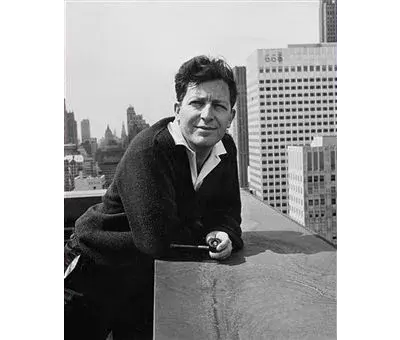
Paul Goodman (1911–1972) was an American author and public intellectual best known for his 1960s works of social criticism. Born to a Jewish family in New York City, Goodman was raised by his aunts and sister and attended City College of New York. As an aspiring writer, he wrote and published poems and fiction before attending graduate school in Chicago. He returned to writing in New York City and took sporadic magazine writing and teaching jobs, many of which he lost for his outward bisexuality and World War II draft resistance. Goodman discovered anarchism and wrote for libertarian journals. He became one of the founders of gestalt therapy and took patients through the 1950s while continuing to write prolifically. His 1960 book of social criticism, Growing Up Absurd, established his importance as a mainstream cultural theorist. Goodman became known as "the philosopher of the New Left" and his anarchistic disposition was influential in 1960s counterculture and the free school movement. His celebrity did not endure far beyond his life, but Goodman is remembered for his principles, outré proposals, and vision of human potential.
