Richard Schiff Quotes
It seems not to matter that we are at the brink of a war that may spread beyond Afghanistan and Iraq to Iran and Georgia and then where? To Syria? To North Korea? To China? That we in America are in economic doldrums and are seeing small businesses fold and houses reclaimed by banks and a smouldering panic that is palpable everywhere.
Schiff, Richard. "The Paradigms That Comfort Us." HuffPost, BuzzFeed, 24 Sept. 2008.


Unmindful of the steady economic prosperity during the 1920s in America, Comintern “assured” American Communists that the economic growth was about to make an abrupt U-turn.


The CIA was supplying planes and pilots to assist anti-Government rebels in their efforts to overthrow Sukarno. Meanwhile, the Secretary of State and other American officials were insisting that America had no involvement in the Indonesian civil war. See {591337}.

His appeal was also in the name of concurring heads of state of Finland, Holland, Denmark, Norway, Luxemburg, and Sweden.

The President had a series of radio talks to the people in which he addressed them directly and explained things as he then understood them.

Trieste was occupied by the British and Americans theoretically, but Tito’s Yugoslavian troops had done most of the WWII fighting and dying in the area and wanted control for the Russian Allies of which Tito was then one. There were frequent armed standoff’s of Anglo Americans and Yugoslav troops that could easily have evolved to full scale fighting. Nine months later, Tito broke with Stalin. An interesting historical fact is that Richard M. Nixon was one of the Congressional Delegation then visiting Trieste.

The Ambassador of Bavaria represented an area where the politicians saw democrats and socialists as their great enemy, as did many of the leading right wing conservatives in all of Germany. They believed that a great war would give them a chance to crush democratic socialism in Europe. Bethmann warned that just the opposite might result, and indeed it did. He was correct. Many of the crowned heads of Europe were deposed and the democratic socialists emerged as a major political factor in the victorious democracies. Bethmann-Hollweg, however, was not a strong leader and could not prevent the Conservatives, the military leaders, and Kaiser Wilhelm from initiating WWI.


Born thought that her agency was responsible for regulating the new esoteric financial products—derivatives including credit default swaps—for otherwise there would be no regulation at all of financial products that could dwarf the stock and bond market. Summers persuaded her to back off. When the Meltdown of 2008 hit, the huge derivative exposure of the large banks and some insurance companies was so great that it was one of the major causes for the meltdown of the entire banking system. Summers, normally a great economist not only called this one wrong, but later, along with most other government and private economists ignored a very explicit warning—See {637168}, {637986}, and {620038}.

American official foreign policy had been officially isolationist—to not get involved in the squabbles and fights of other nations. Angell however pointed out that even before WWII, America had formally been involved in 6 foreign wars and used military incursions on foreign soil on almost 100 occasions.
Like many in the 1920s, Dewar saw the Communist Soviet Union as the biggest potential risk to peace. However, although the Russian leaders constantly castigated the West, they did not have a large military, and were for the most part highly anti-war as they saw war as the product of Capitalistic competition and the tool of the aristocracy. They had little military equipment and almost no training or officer corps with which to build any Army. Germany in contrast had the skill, experience, officers, a history of aggression, and huge resentment over what they considered their humiliating WWI defeat and peace terms. They would start WWII, not Russia.


Although Great Britain had abolished slavery, British economic interests during the Civil War suffered because of the northern blockade of the South. Much political opinion in England was hostile to the blockade policies of the Union. Bright, a great admirer and supporter of the United Sates and the Union cause was concerned that the United States might drift into War with Great Britain. His letter to Senator Sumner was written with the understanding that it would be in shared with President Lincoln, and it was actually read at a cabinet meeting.

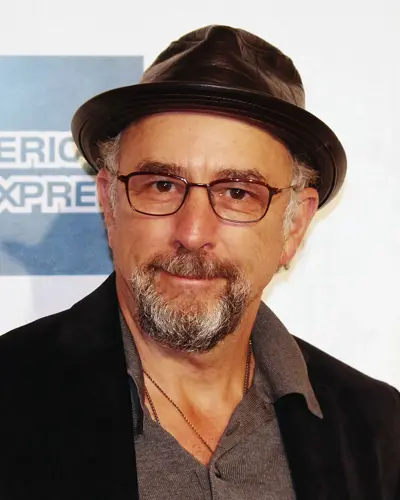
Richard Schiff is an American actor and director. He is best known for playing Toby Ziegler on The West Wing, a role for which he received an Emmy Award. Schiff made his directorial debut with The West Wing, directing an episode titled "Talking Points". He is on the National Advisory Board of the Council for a Livable World. He had a recurring role on the HBO series Ballers. Since September 2017 he has had a leading role in ABC's medical drama The Good Doctor, as Dr. Aaron Glassman, president of a fictional teaching hospital in San Jose, California.
