Albert J. Nock Quotes
It is unfortunately none too well understood that, just as the State has no money of its own, so it has no power of its own. All the power it has is what society gives it, plus what it confiscates from time to time on one pretext or another, there is no other source from which State power can be drawn. Therefore every assumption of State power, whether by gift or seizure leaves society with so much less power; there is never, nor can be, any strengthening of State power without a corresponding and roughly equivalent depletion of social power.
Nock, Albert J. Our Enemy, the State. William Morrow & Company, 1935, p. 3.


Slavery was Hammond’s pet example where the Federal Government was constantly trying to limit, and control the South. However, he and later anarchists many libertarians of this day see the issue as a general principle.


This is just the opposite of the American Democracy in which the government serves the citizens rather than the Fascist opposite notion.

He was referring to Russian elections. The reasons that elections in Russia are not necessary for legitimizing state power to be used by the current government, is that from the early days of the Russian Czars, the tradition and culture assumed that if there is a threat to "Mother Russia", everyone and everything in the state is at the disposal of the government, no matter who is in power. It is so strongly embedded in the culture that although many Russians want fee elections and the right to choose their leaders, they have no question that the government alway has the right and duty to marshall amm the human and physical resources to protect the state, See Quotation 644072 for more on this imporatnt concept in Russia.


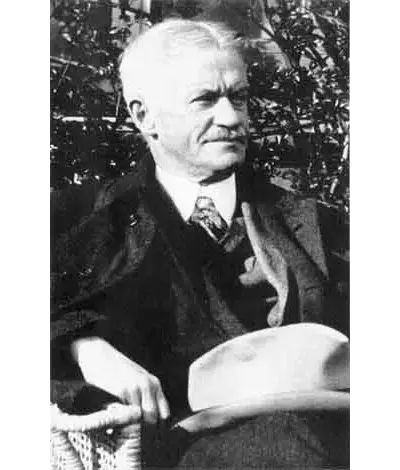
Albert Jay Nock was an American libertarian author, editor first of The Freeman and then The Nation, educational theorist, Georgist, and social critic of the early and middle 20th century. He was an outspoken opponent of the New Deal, and served as a fundamental inspiration for the modern libertarian and conservative movements, cited as an influence by William F. Buckley Jr. He was one of the first Americans to self-identify as "libertarian". His best-known books are Memoirs of a Superfluous Man and Our Enemy, the State.
