Thomas E. Dewey Quotes
It is the policy of the state [of New York] that the American ideal of equality of opportunity requires that students ... be admitted to educational institutions without regard to race, color, religion, creed, or national origin.
Thomas E. Dewey, 1902-1971, Governor of New York (Republican), Republican Nominee for President, Albany, NY, April 3, 1948
Sourced by: Eigen's Political and Historical Quotations


It would be over 80 years before President Harry S Truman accomplished the result by issuing an Executive Order.


The decision was 5-4 and reversed a trend in which the court had been going before. Roberts and another appointment by George W. Bush tilted the majority. See {614911} for a quotation from the 4 justice dissent.


When the Democrats won the presidency, there was great fear that all the appointments that Blacks had garnered would be undone as the results of the Southern racist element of the Democratic party. The President held the line, much to the distress of his Southern supporters.


Subsection (1) states that all Canadians are equal. Canada built affirmative action into its most recent constitution.


The Prime Minister had begun his career as a proponent of apartheid, but by 1990 had reversed course.

The function of government is to


Gates, a Black man, was one of the leading intellectuals in America. Until relatively recently, most schools had quotas of how many Blacks they would take. Many also had quotas for Jews, Asians and other minorities. It was affirmative action that started the change in racial discrimination in colleges and universities.


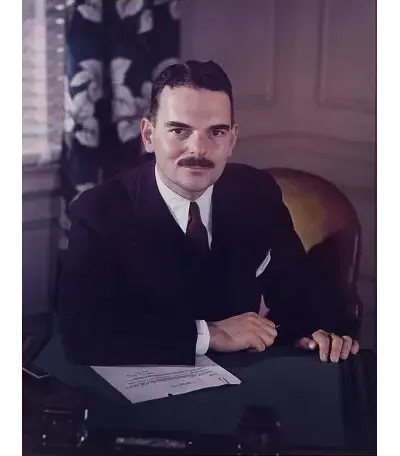
Thomas Edmund Dewey was an American lawyer, prosecutor, and politician. Raised in Owosso, Michigan, Dewey was a member of the Republican Party. He served as the 47th governor of New York from 1943 to 1954. In 1944 he was the Republican Party's nominee for president, but lost the election to incumbent Franklin D. Roosevelt in the closest of Roosevelt's four presidential elections. He was again the Republican presidential nominee in 1948, but lost to President Harry S. Truman in one of the greatest upsets in presidential election history. Dewey played a large role in winning the Republican presidential nomination for Dwight D. Eisenhower in 1952, and helped Eisenhower win the presidential election that year. He also played a large part in the choice of Richard Nixon as the Republican vice-presidential nominee in 1952 and 1956.
