Mahatma Gandhi Quotes
It is the absolute right of India to misgovern herself.
Gandhi, Mahatma. The Collected Works of Mahatma Gandhi. Vol. 25, Publications Division, Ministry of Information and Broadcasting, Government of India, 1967.


He attempted to broker an agreement between India’s Muslims and Hindus as to the form of the successor government.

The United States was opposed to elections at the beginning of the Vietnam war. The Viet Min, the Russian and Chinese recognized government of Ho Chi Min, was extremely well organized as a result of their cohesive organization and victory over the French Colonialists. At the urging of the French, we supported the previous Vietnam Emperor who the French had supported. However his popularity was limited to Saigon and French Colonial centers. The majority of the population saw him as the collaborator who was propped up by the hated French. There was no way that the Communist Viet Min would lose in an election. There had been no time for the people to see what peacetime living under the communists was like, and what they knew of the Emperor, they did not like. It was important to keep Vietnam from falling into the hands of the Communists. Once they won one election they would control the machinery of government to be sure that they won all subsequent elections even if the people wanted a change in government. The German newspaper thought that we should stick to our principles and allow a free election and live with the consequences. In retrospect, we would be where we ended up anyway with the Communist Viet Min in totalitarian control of the country and we would have saved many lives and much money.


Under the Kissinger Foreign Policy this was his oft stated policy. The United States however gave a great deal of advice about their internal affairs to foreign leaders. Those that did not take it, did not get as much foreign or military aid, and sometimes found themselves ousted in a coup which resulted in a regime change or with their country being boycotted.


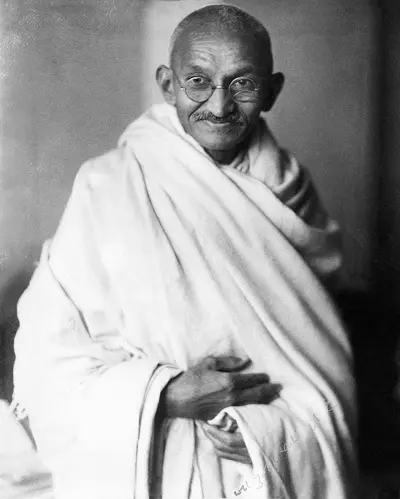
Mohandas Karamchand Gandhi was an Indian lawyer, anti-colonial nationalist, and political ethicist, who employed nonviolent resistance to lead the successful campaign for India's independence from British rule, and in turn inspired movements for civil rights and freedom across the world. The honorific Mahātmā (Sanskrit: "great-souled", "venerable"), first applied to him in 1914 in South Africa, is now used throughout the world.
