Frances Wright Quotes
It is singular to look round upon a country where the dreams of sages, smiled at as utopian, seem distinctly realized, a people voluntarily submitting to laws of their own imposing, with arms in their hands respecting the voice of a government which their breath created and which their breath could in a moment destroy!
Wright, Frances. Views of Society and Manners in America. E. Bliss and E. White, 1821, p. 21.


The government relationship to people phrase, although probably Lincoln's most famous, was not totally original. John Adams came close in a 1774 proclamation. As did John Marshall in his McCulloch v. Maryland decision. Daniel Webster's Speech on Foot's Resolution was very close. as was Theodore Parker in 1850 {629578}. There was also Thomas Cooper in 1795. But the earliest appears to be John Wycliffe in 1382 {567292}. It is not known with which of these Lincoln was familiar.


For that, the Church burned him at the stake. Note the phraseology and compare it to Gettysburg Address {458852}. It is not known whether Lincoln was aware of this quotation or others that used similar wording.


Lieber is best known because he was assigned by President Lincoln to study the then international laws of war and prepare a manual for the guidance of union troops in the Civil War. Lincoln then issued the document as a general order.


This was the first contact between the colonists and the French government. The French agent was very non committal and the parties were just feeling each other out. Franklin made it perfectly clear that the colonists would not trade the English King for a French one and become part of the French empire.


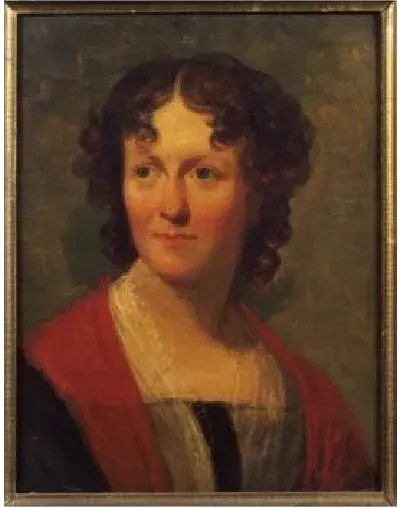
Frances Wright, widely known as Fanny Wright, was a Scottish-born lecturer, writer, freethinker, feminist, utopian socialist, abolitionist, social reformer, and Epicurean philosopher, who became a US citizen in 1825. The same year, she founded the Nashoba Commune in Tennessee, as a utopian community to demonstrate how to prepare slaves for eventual emancipation, but the project lasted only five years. In the late 1820s Wright was the first woman lecturer to speak publicly before gatherings of men and women in the United States about political and social-reform issues. She advocated universal education, the emancipation of slaves, birth control, equal rights, sexual freedom, legal rights for married women, and liberal divorce laws. Wright was also vocal in her opposition to organized religion and capital punishment. The clergy and the press harshly criticized Wright's radical views. Her public lectures in the United States led to the establishment of Fanny Wright societies and her association with the Working Men's Party, organized in New York City in 1829, became so strong that its opponents called the party's slate of candidates the Fanny Wright ticket.
