Aristotle Quotes
It is better for a city to be governed by a good man than by good laws.


China, after overthrowing the Manchu Dynasty was struggling among many factions for control of the government. Many of the potential leaders were corrupt.


Mali was then virtually a failed state where some mid level military seized “control” but had no other objective than to stay in control with no vision of what the country should be. Meanwhile there were several tribal groups that wanted autonomy. International Islamists whose only interest was in instituting Sharia Law and groups of smugglers, kidnappers and other criminals. The military had insufficient skill and power to control the other factions. The political groups lacked enough common vision, military resources and skill or common ethnicity to control or to even defend themselves against the International Islamists who could take over areas of the country but became rapidly unpopular with the traditional secularist leaning Mali Muslims. French and Africa forces rolled back the International Islamists, and there were calls for elections among Americans and other Nations but Lattemont urged caution in relying on elections at this stage of development of a country.


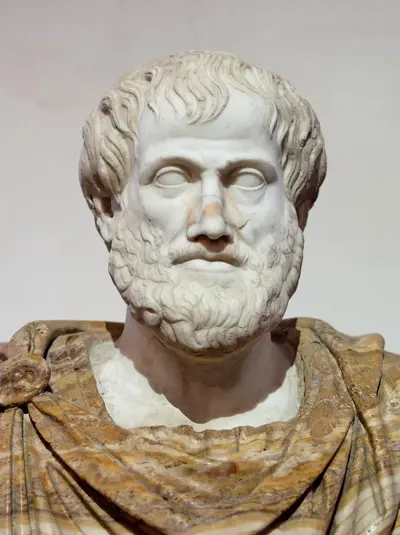
Aristotle (/ærɪˈstɒtəl/; Greek: Ἀριστοτέλης Aristotélēs, pronounced [aristotélɛːs]; 384–322 BC) was a Greek philosopher and polymath during the Classical period in Ancient Greece. Taught by Plato, he was the founder of the Lyceum, the Peripatetic school of philosophy, and the Aristotelian tradition. His writings cover many subjects including physics, biology, zoology, metaphysics, logic, ethics, aesthetics, poetry, theatre, music, rhetoric, psychology, linguistics, economics, politics, meteorology, geology and government. Aristotle provided a complex synthesis of the various philosophies existing prior to him. It was above all from his teachings that the West inherited its intellectual lexicon, as well as problems and methods of inquiry. As a result, his philosophy has exerted a unique influence on almost every form of knowledge in the West and it continues to be a subject of contemporary philosophical discussion.
